
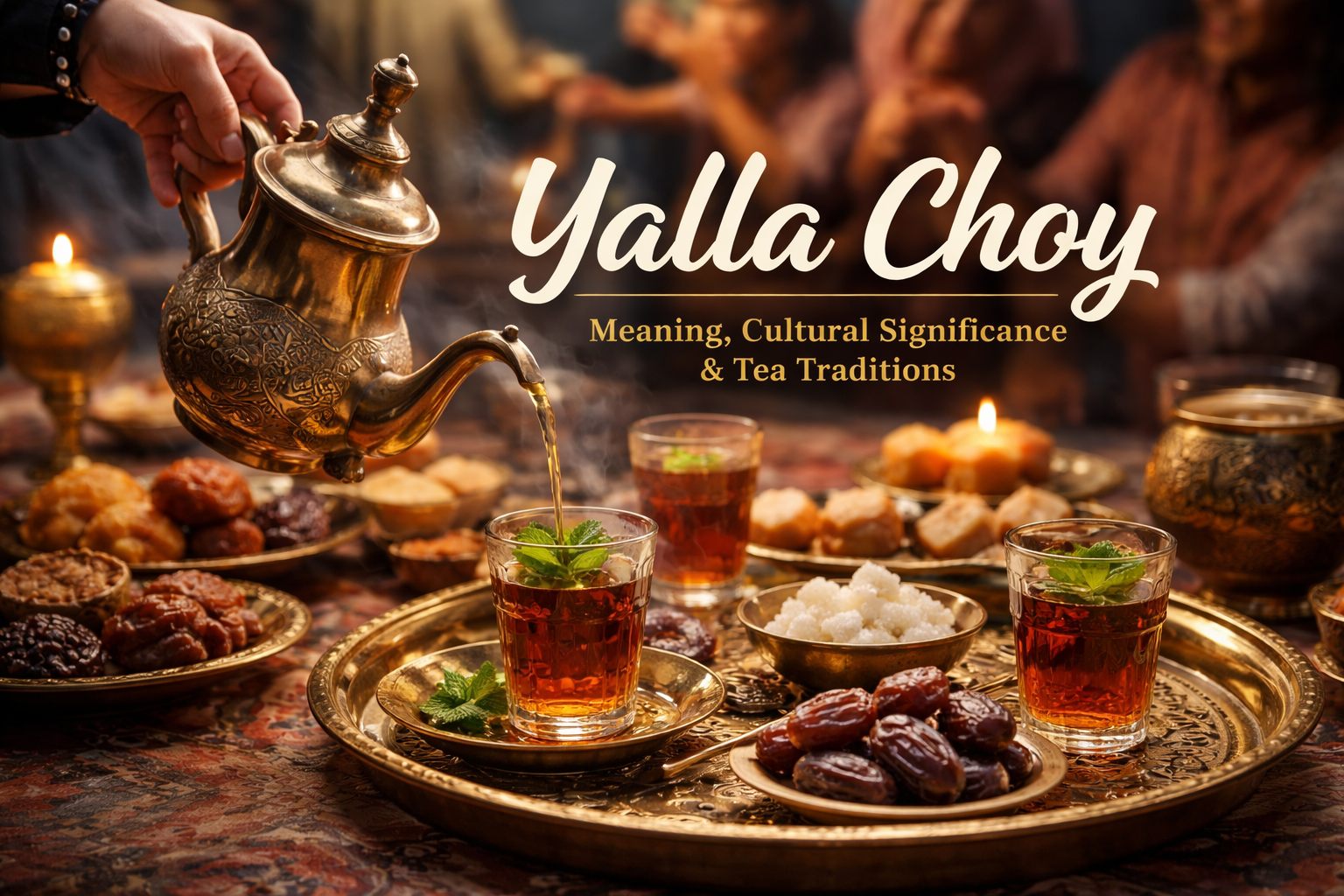
yalla choy is a culturally significant phrase commonly used in Middle Eastern and South Asian regions, meaning “let’s have tea.” It reflects social hospitality, communal gatherings, and traditional tea-drinking practices. The term is often associated with informal invitations, daily rituals, and the celebration of tea as a central element of social life.
Definition
The phrase yalla choy combines two elements:
- “Yalla” – An Arabic expression meaning “come on” or “let’s go”
- “Choy” – Derived from the Persian and South Asian word for “tea”
Together, it literally translates to “let’s have tea”. However, its usage is more than literal; it conveys an invitation to socialize, relax, or enjoy hospitality. In everyday speech, It may be used to:
- Invite friends or family to a tea session
- Signal a break at work or study
- Begin a social gathering around tea
According to cultural linguistics studies, yalla choy is an example of how language captures social rituals, blending Arabic and regional influences into a common phrase.
Linguistic Origin of the Term
The components of the phrase come from distinct linguistic roots:
- “Yalla”: Arabic, used across the Middle East and North Africa as a prompt to start an activity.
- “Choy”: Persian origin, adopted widely in Central and South Asia to denote tea.
The fusion of these terms demonstrates cross-cultural language adoption, reflecting historical trade routes and interactions. Tea itself was introduced via trade from China through Persia and Central Asia into the Middle East, which likely influenced the adoption of choy in everyday language.
Regional Interpretations
While the phrase is widely recognized, its interpretation may vary:
| Region | Meaning / Usage | Notes |
|---|---|---|
| Middle East | Invitation to drink tea socially | Common in informal gatherings |
| South Asia | Tea as hospitality or break-time | Integrated into workplace and home culture |
| Diaspora Communities | Social or online context | Used in cafés, social media, or virtual interactions |
The regional nuances highlight how yalla choy functions both as a phrase and as a cultural marker. Its flexibility allows it to maintain relevance in daily conversation while retaining historical and social significance.
Quick Understanding
yalla choy is a social and cultural phrase meaning “let’s have tea,” widely used in Middle Eastern and South Asian contexts to signal hospitality, relaxation, and communal interaction. It reflects linguistic blending and historical tea traditions.
Cultural Context of yalla choy
Tea in Middle Eastern and South Asian Cultures
Tea plays a central role in many cultures, especially in regions where yalla choy originates:
- Middle Eastern countries: Tea is part of daily hospitality, served with sugar, mint, or cardamom.
- South Asian regions: Tea (chai) is a social staple, often prepared with spices like ginger, cardamom, or masala.
Historically, tea became a symbol of social bonding and welcome, transcending its simple function as a beverage.
Hospitality and Social Rituals
Using yalla choy as an invitation reflects deeper cultural practices:
- Welcoming Guests: Tea is offered immediately as a gesture of respect.
- Family Gatherings: Daily or weekly rituals often center around shared tea.
- Workplace Tea Breaks: Social and informal discussions occur over tea.
These practices show that yalla choy is not just a phrase but a marker of community and relational etiquette.
Modern Usage in Cafés and Daily Life
In contemporary contexts, yalla choy appears in:
- Café menus highlighting Middle Eastern or South Asian tea blends
- Social media posts emphasizing tea culture
- Digital interactions among diaspora communities
This modern adaptation demonstrates how traditional phrases can evolve while maintaining cultural resonance.
Table 1: Tea Types and Regional Names
| Region | Tea Type | Typical Ingredients | Social Context |
|---|---|---|---|
| Middle East | Black Tea with Mint | Sugar, fresh mint | Guest hospitality, social gathering |
| South Asia | Chai / Masala Chai | Milk, sugar, spices | Home ritual, café culture |
| Central Asia | Green Tea | Sugar, sometimes milk | Everyday drinking, ceremonial use |
| Diaspora / Online | Various blends | Adapted to taste | Social media, café branding |
Discover About: cesta roman – Meaning, Origins, and Historical Context Explained
Key Takeaways
- yalla choy represents both a phrase and a cultural practice.
- Tea is central to social interaction, hospitality, and daily life.
- Linguistic fusion illustrates historical trade and cultural exchange.
How yalla choy is Prepared and Served
Traditional Preparation Methods
Traditional preparation of yalla choy varies by region, but generally emphasizes a rich, aromatic tea served in social contexts:
- Middle Eastern Style:
- Boil black tea leaves with water
- Add fresh mint leaves and sugar
- Steep for 3–5 minutes
- Serve in small glasses, often accompanied by dates or pastries
- South Asian Style (Chai / Masala Chai):
- Boil water with black tea leaves
- Add milk, sugar, and spices (cardamom, ginger, cinnamon)
- Simmer until aromatic and flavorful
- Served in cups or small clay glasses
- Ceremonial Additions: Some regions include saffron, rose water, or cloves to enhance flavor during festive or formal occasions.
According to cultural beverage studies, serving tea is as important as its preparation; presentation and hospitality etiquette are integral to the yalla choy ritual.
Variations Across Regions
| Region | Tea Style | Typical Ingredients | Serving Context |
|---|---|---|---|
| Middle East | Black Tea with Mint | Sugar, fresh mint | Social gatherings, hospitality |
| South Asia | Masala Chai | Milk, sugar, ginger, cardamom | Daily ritual, street cafés |
| Central Asia | Green Tea | Lightly brewed, sugar optional | Formal gatherings, afternoon tea |
| Modern Cafés | Specialty Blends | Herbs, spices, fruit infusions | Trendy cafés, social media aesthetic |
These variations demonstrate how yalla choy adapts to local taste preferences while retaining cultural significance.
Modern Café Adaptations
In urban café culture, yalla choy has inspired:
- Herbal and flavored blends for Instagram-friendly presentation
- Quick-service tea offerings alongside snacks
- Fusion drinks incorporating traditional spices with modern techniques
This evolution highlights the blend of tradition and contemporary lifestyle, keeping the phrase relevant among younger generations.
Social Significance of yalla choy
Tea as a Symbol of Hospitality
yalla choy is more than a beverage; it is a social ritual:
- Inviting someone with yalla choy signals welcome and respect
- Shared tea strengthens friendship and family bonds
- Tea offerings often serve as ice-breakers in professional or informal gatherings
Historical and anthropological studies note that tea ceremonies often reflect values of generosity, patience, and cultural continuity.
Role in Gatherings and Celebrations
Tea plays a central role in:
- Weddings and festive events
- Community meetings
- Daily family routines
Using yalla choy in such contexts reinforces social cohesion and cultural identity, ensuring the practice survives across generations.
Digital and Online Representation
In the digital age, yalla choy appears in:
- Social media hashtags celebrating tea culture
- Café branding and lifestyle photography
- Online tutorials for traditional tea preparation
These online adaptations help preserve the cultural essence while introducing it to global audiences.
Table 2: Preparation Styles Comparison
| Style | Ingredients | Preparation Time | Social Context |
|---|---|---|---|
| Traditional Middle Eastern | Black tea, mint, sugar | 5–10 minutes | Hospitality, family gatherings |
| South Asian Masala Chai | Black tea, milk, sugar, spices | 10–15 minutes | Daily rituals, street cafés |
| Modern Café | Specialty tea blends, herbs, spices | 3–7 minutes | Trendy cafés, social sharing |
Common Misconceptions about yalla choy
Misinterpretation as a Brand or Product
Some mistakenly view yalla choy as a commercial brand rather than a cultural phrase describing tea rituals. While some cafés may adopt it for marketing, the term primarily reflects social and cultural practice.
Confusion with Similar Phrases
- “Yalla chai” or “choy time” may be used interchangeably, causing minor confusion.
- The essence remains: an invitation to drink tea socially.
Cultural vs Commercial Uses
- Cultural Use: Daily tea, hospitality, family gatherings
- Commercial Use: Café branding, packaged tea products, social media references
Clarifying this distinction is essential for understanding authentic yalla choy traditions.
Quick Clarification
- yalla choy is primarily a social phrase, not a specific tea brand
- It signifies hospitality, social bonding, and tea culture
- Usage varies regionally but maintains core cultural essence
Why yalla choy is Popular Today
Increasing Global Tea Culture
Tea is one of the most consumed beverages globally, and cultural phrases like yalla choy help connect tradition with modern consumption trends.
- Tea cafés and specialty blends have popularized cultural tea terms worldwide
- People embrace phrases like yalla choy as part of authentic cultural experiences
Social Media and Trend Influence
- Hashtags (#yallachoy) and online tutorials enhance visibility
- Memes, lifestyle posts, and café photography introduce yalla choy to global audiences
This trend demonstrates how traditional practices gain renewed relevance through digital platforms.
Café Culture Expansion
Modern cafés use yalla choy to:
- Signal authenticity in Middle Eastern or South Asian tea offerings
- Create culturally themed experiences
- Engage younger audiences with visual and social media appeal
By blending tradition with urban lifestyle, yalla choy continues to bridge cultural heritage and contemporary consumption.
Conclusion
yalla choy is more than a phrase; it is a cultural and social tradition that encapsulates hospitality, community, and the enjoyment of tea. From traditional preparation methods to modern café adaptations and online representation, yalla choy reflects the enduring significance of tea in social interaction. Understanding yalla choy requires appreciation of its linguistic roots, cultural context, and evolving role in modern society.
FAQs
1. What does yalla choy mean?
yalla choy means “let’s have tea,” commonly used in Middle Eastern and South Asian contexts as an invitation to drink and socialize.
2. Where does yalla choy originate?
It originates from Arabic (“yalla”) and Persian/South Asian (“choy”), reflecting historical trade routes and linguistic exchange.
3. How is yalla choy served traditionally?
It is served as black tea with mint in Middle East, or spiced masala chai in South Asia, usually in small glasses or cups during social gatherings.
4. Is yalla choy a commercial brand?
No, it is primarily a cultural phrase, though some cafés and businesses may use it for branding purposes.
5. What is the cultural significance of yalla choy?
It symbolizes hospitality, social bonding, and daily or ceremonial tea rituals.
6. Can yalla choy be found outside its regions?
Yes, it is popular in diaspora communities, global cafés, and online social media platforms.
7. How has yalla choy adapted in modern times?
It is now represented in cafés, specialty teas, social media content, and digital tutorials while maintaining its traditional social meaning.
References
Authoritative Entity References (with links)
- National Geographic Society – History and cultural significance of tea
https://www.nationalgeographic.com/culture/article/history-of-tea - Smithsonian Institution – Global tea traditions and cultural practices
https://www.smithsonianmag.com/history/a-brief-history-of-tea-180970884/ - BBC Culture – Comparative tea rituals around the world
https://www.bbc.com/culture/article/20180115-the-global-tea-culture - Tea Association of the USA – Tea preparation and consumption data
https://www.teausa.com/tea-statistics - Oxford University Press – Linguistic research on tea terminology and language origins
https://global.oup.com/ - International Tea Committee – Global tea production and consumption insights
https://www.inttea.com/ - World Tea News – Trends in tea culture and beverages
https://www.worldteanews.com/
