
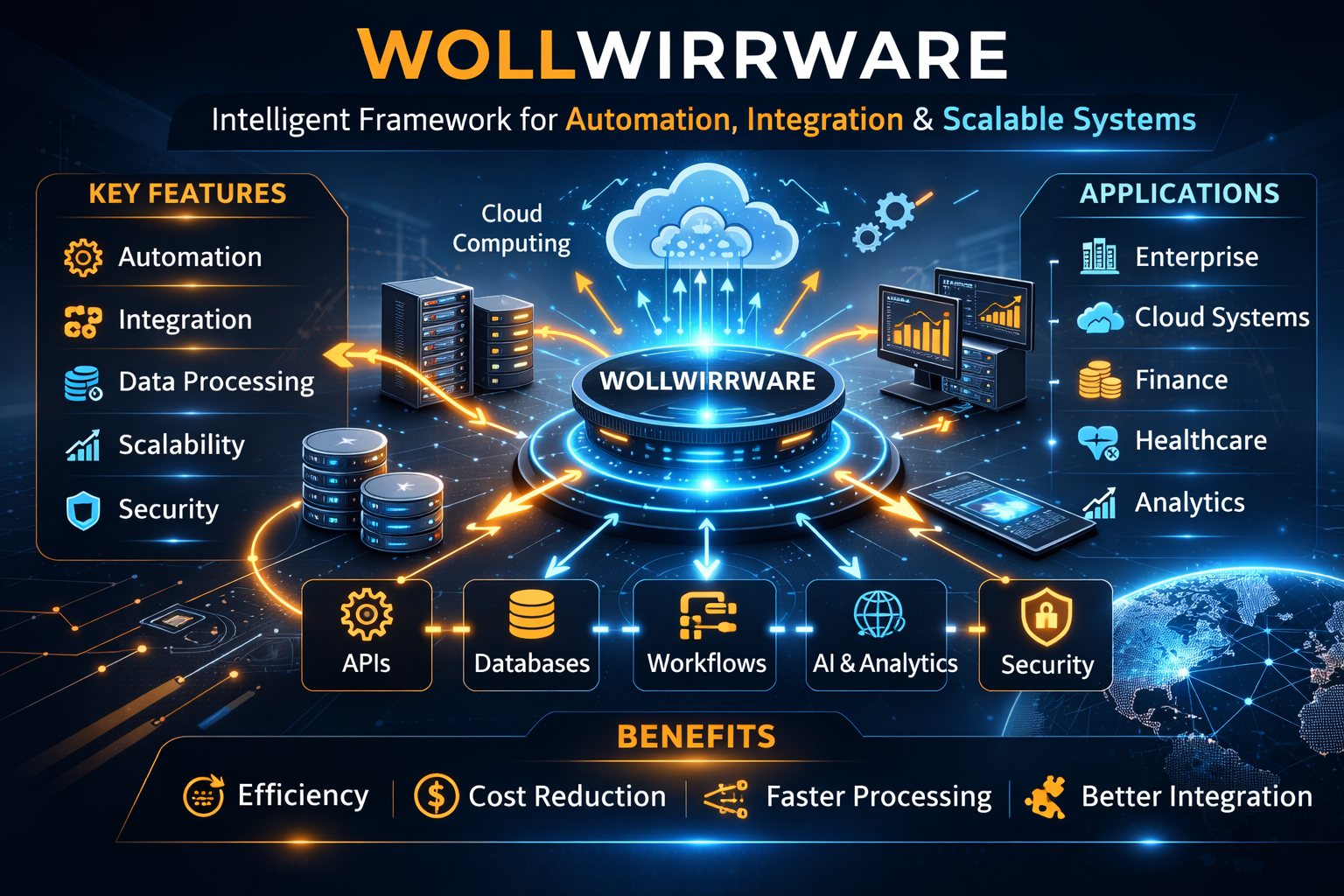
Wollwirrware refers to a conceptual digital system or framework used to manage complex software operations through structured automation, scalable architecture, and integrated workflows. It is designed to improve efficiency in modern technology environments by enabling data processing, system integration, and flexible infrastructure management across enterprise and cloud-based platforms.
Definition of Wollwirrware
Wollwirrware describes a structured digital framework used to coordinate complex computing processes, data flows, and automated system operations. It represents a conceptual approach to organizing software architecture in a way that improves scalability, integration, and operational efficiency.
In modern digital ecosystems, software systems often consist of multiple interconnected components such as databases, APIs, cloud services, and automation tools. Wollwirrware is used to manage these interconnected components through a unified structure that simplifies workflows and system coordination.
From an industry perspective, wollwirrware functions as a software management layer that ensures various technologies communicate effectively. Instead of isolated tools operating independently, the framework allows systems to function as part of an integrated technological environment.
According to industry standards in enterprise software design, structured frameworks similar to wollwirrware improve system stability, automation capabilities, and operational visibility.
Definition Breakdown
| Component | Explanation |
|---|---|
| Framework Structure | Organizes software components into a manageable architecture |
| Automation Layer | Enables automatic workflows and task execution |
| Integration System | Connects different applications and services |
| Data Coordination | Ensures smooth data exchange between platforms |
These elements allow wollwirrware-based environments to support complex business systems without creating operational fragmentation.
Core Concept Behind Wollwirrware
The core concept of wollwirrware is structured system coordination. In large digital environments, organizations rely on multiple tools and services simultaneously. Without an organized framework, these systems can become inefficient and difficult to maintain.
Wollwirrware introduces a structured approach where:
- software modules operate within defined roles
- workflows are automated across platforms
- data exchange follows standardized protocols
- systems remain scalable as operations grow
This concept aligns with modern distributed computing principles, where computing resources and applications operate across multiple servers or cloud infrastructures.
Core Principles
- System Integration
Multiple software applications communicate within a coordinated architecture. - Automation of Processes
Routine tasks and operations are handled automatically. - Scalable Infrastructure
Systems can grow without major redesign. - Data Synchronization
Information flows consistently between different components.
These principles allow organizations to maintain efficient digital operations even when dealing with large volumes of data and complex technological infrastructures.
Why Wollwirrware Is Gaining Attention
The growing interest in wollwirrware is closely linked to the expansion of digital transformation strategies across industries.
Businesses today rely heavily on:
- cloud platforms
- enterprise software systems
- real-time data processing
- automated workflows
As the number of digital tools increases, managing them becomes more complex. Wollwirrware provides a framework that simplifies this complexity.
Several technological developments contribute to the rising relevance of this concept.
1. Growth of Cloud Computing
Modern organizations rely heavily on cloud infrastructure for scalability and accessibility. Framework-based system structures allow cloud services to operate more efficiently by coordinating distributed resources.
2. Increased Data Processing Needs
Companies now process massive volumes of information daily. Structured systems like wollwirrware enable better data orchestration, ensuring that data moves efficiently between applications.
3. Automation in Business Operations
Automation is now a central component of enterprise systems. From financial processing to supply chain monitoring, automated workflows reduce manual effort and increase operational accuracy.
4. Demand for System Flexibility
Traditional monolithic software architectures are gradually being replaced by modular and scalable systems. Wollwirrware-style frameworks support this transition by enabling adaptable infrastructure.
Key Insight
Modern digital environments require coordinated frameworks to manage interconnected technologies. Wollwirrware represents one approach to organizing these systems efficiently.
Key Characteristics of Wollwirrware Systems
Wollwirrware-based systems share several defining characteristics that distinguish them from traditional software environments.
1. Modular Architecture
Instead of relying on a single large software structure, wollwirrware organizes systems into smaller functional modules.
Each module performs a specific role, such as:
- data processing
- user authentication
- transaction management
- reporting and analytics
This modular design improves flexibility because modules can be modified or upgraded without affecting the entire system.
2. Integration Capability
A major advantage of wollwirrware frameworks is their ability to connect different applications and services.
For example, a typical digital environment may include:
- financial management systems
- customer databases
- marketing automation tools
- analytics platforms
Integration capabilities ensure these tools exchange information seamlessly.
3. Automated Workflows
Automation is a central feature of wollwirrware environments.
Instead of manual coordination between departments or systems, automated workflows allow processes to occur automatically based on predefined rules.
Examples include:
- automatic data synchronization
- scheduled system updates
- triggered alerts and notifications
- automated reporting generation
Automation improves operational efficiency while reducing human error.
4. Scalable Infrastructure
Scalability allows systems to grow as business demands increase.
Wollwirrware frameworks typically support:
- horizontal scaling (adding servers)
- vertical scaling (increasing computing resources)
- dynamic resource allocation
This scalability ensures the system remains stable even when workloads increase.
5. Data Coordination
Modern software ecosystems rely on accurate data exchange.
Wollwirrware ensures that information moves between components in a consistent and structured manner.
This coordination supports:
- real-time analytics
- operational monitoring
- decision-making processes
According to enterprise system design practices, efficient data coordination is essential for maintaining reliable digital infrastructures.
Key Takeaways About Wollwirrware
Important Facts
- Wollwirrware is a structured framework for managing complex software systems.
- It enables automation, integration, and scalable infrastructure.
- The concept supports modern digital environments where multiple technologies must operate together.
- Businesses use similar frameworks to improve efficiency and reduce system complexity.
Also Read: Framework Homeownership Making an Offer Answers: Complete Buyer Guide
How Wollwirrware Works
Understanding how wollwirrware operates requires examining the technical architecture that supports it. Although implementations may vary depending on the organization or platform, most wollwirrware systems follow a layered operational structure.
These layers allow different components of the system to perform specialized roles while remaining coordinated.
Underlying Architecture
The architecture of wollwirrware frameworks typically follows a layered model, where each layer manages a specific part of system operations.
Architecture Layers
| Layer | Function |
|---|---|
| Infrastructure Layer | Provides computing resources such as servers and storage |
| Integration Layer | Connects external services and internal applications |
| Processing Layer | Handles logic, automation, and data processing |
| Interface Layer | Provides dashboards and user interaction |
This layered structure ensures that each system component performs its function without interfering with others.
Core Functional Components
Several components work together inside a wollwirrware environment.
1. Integration Modules
Integration modules connect external software platforms through standardized interfaces.
These modules support communication between:
- enterprise systems
- cloud services
- internal applications
Integration modules often rely on API-based communication protocols.
2. Automation Engines
Automation engines execute predefined workflows and processes.
Typical automation tasks include:
- data synchronization
- event-triggered operations
- system monitoring tasks
Automation engines reduce manual workload while improving operational consistency.
3. Data Management Systems
Data management components control how information is stored, processed, and distributed within the system.
These components support:
- database management
- data validation
- analytics processing
Proper data management ensures accurate information flow across the entire infrastructure.
4. Monitoring and Control Systems
Monitoring tools track system performance and identify operational issues.
Monitoring functions typically include:
- performance tracking
- error detection
- resource usage monitoring
Organizations rely on these monitoring systems to maintain stable and efficient digital environments.
Integration With Digital Systems
One of the most valuable aspects of wollwirrware frameworks is their ability to integrate with multiple technologies simultaneously.
Modern businesses operate numerous digital tools that must communicate effectively.
Typical integrations include:
- cloud computing services
- enterprise resource planning platforms
- customer relationship management systems
- analytics platforms
Integration ensures that information flows between systems without manual data transfer.
This capability improves:
- operational speed
- data accuracy
- organizational efficiency
Typical Workflow of Wollwirrware
A typical wollwirrware workflow follows a structured process that allows systems to communicate and operate automatically.
Step-by-Step Workflow
| Step | Description |
|---|---|
| Data Input | Information enters the system from external platforms |
| Processing | Automation engines analyze and process the data |
| Integration | Processed information is shared with connected systems |
| Execution | Automated workflows perform required tasks |
| Monitoring | System performance and results are tracked |
This workflow allows organizations to operate complex digital systems with minimal manual intervention.
Quick Insight
Wollwirrware works by connecting software systems, automating processes, and coordinating data across a scalable architecture.
The framework acts as an operational backbone that allows modern digital environments to function efficiently.
Key Features of Wollwirrware
Understanding the capabilities of wollwirrware requires examining the features that define how this framework operates in modern digital infrastructures. These features enable organizations to handle large-scale systems, automate processes, and maintain operational efficiency across interconnected platforms.
The functionality of wollwirrware frameworks often reflects the requirements of enterprise-level computing environments where reliability, scalability, and integration are essential.
Automation Capabilities
Automation is one of the most critical features of wollwirrware systems. Instead of relying on manual operations for repetitive tasks, automation engines execute workflows based on predefined rules.
Automation allows digital systems to respond to events automatically without requiring human intervention.
Examples of automated operations include:
- scheduled data synchronization
- automatic report generation
- triggered system alerts
- transaction validation processes
- infrastructure monitoring updates
Automation improves operational speed and reduces the risk of errors caused by manual input.
According to enterprise automation standards, automated systems can significantly increase operational efficiency by eliminating redundant tasks and enabling real-time processing.
Automation Benefits
| Benefit | Explanation |
|---|---|
| Reduced Human Error | Automated tasks minimize manual mistakes |
| Faster Operations | Processes execute instantly based on triggers |
| Continuous Monitoring | Systems operate and monitor 24/7 |
| Workflow Consistency | Standardized rules ensure uniform results |
Organizations that adopt automation frameworks typically experience improved productivity and streamlined operational workflows.
Scalability and Flexibility
Scalability refers to a system’s ability to handle increased workloads without compromising performance. Wollwirrware frameworks are designed to operate within scalable architectures that allow businesses to expand operations without rebuilding entire systems.
Scalable systems typically support two types of expansion:
Horizontal Scaling
Horizontal scaling involves adding additional computing resources such as servers or nodes. This approach distributes workloads across multiple systems, improving reliability and performance.
Vertical Scaling
Vertical scaling increases the capacity of existing infrastructure by enhancing processing power, memory, or storage capabilities.
Wollwirrware supports both methods, allowing organizations to adjust their infrastructure based on operational needs.
Flexibility is another important component. Modular frameworks allow developers to modify individual components without disrupting the entire architecture.
This flexibility supports continuous system improvement and technological upgrades.
Data Processing Efficiency
Data plays a central role in modern digital environments. Businesses rely on accurate and timely information to make strategic decisions.
Wollwirrware frameworks facilitate efficient data processing by coordinating data flows between different software components.
Key data management functions include:
- real-time data synchronization
- distributed database access
- structured data pipelines
- analytics integration
Efficient data handling allows systems to process large datasets quickly while maintaining data accuracy and integrity.
According to digital infrastructure research, organizations that adopt structured data frameworks often improve their analytical capabilities and operational insights.
Security and Reliability
Security and reliability are essential for enterprise systems. Digital infrastructures often handle sensitive information, financial transactions, and critical operational data.
Wollwirrware frameworks support security through structured control mechanisms such as:
- authentication protocols
- access control systems
- encryption processes
- monitoring and auditing tools
These security measures protect systems against unauthorized access and potential vulnerabilities.
Reliability is achieved through system redundancy and continuous monitoring. Redundant components ensure that operations continue even if individual modules encounter technical issues.
Core Features of Wollwirrware
Key Capabilities
- automation-driven workflows
- scalable infrastructure design
- efficient data coordination
- secure and reliable system management
These features make wollwirrware frameworks suitable for complex digital ecosystems that require consistent performance and operational flexibility.
Major Applications of Wollwirrware
Wollwirrware frameworks can support a wide range of industries and operational environments. Because they are designed to coordinate complex digital systems, their applications extend across multiple sectors that rely heavily on technology infrastructure.
Enterprise Software Systems
Large organizations often use enterprise software platforms to manage operations such as finance, logistics, and customer data.
Wollwirrware frameworks provide a structured architecture that connects various enterprise tools and ensures smooth communication between them.
Enterprise systems typically require integration between:
- accounting platforms
- human resource systems
- inventory management software
- analytics tools
Using a centralized framework simplifies these integrations and reduces operational fragmentation.
Digital Infrastructure Management
Digital infrastructure consists of the hardware and software components required to run modern technology systems.
Infrastructure management includes monitoring servers, managing databases, and ensuring network reliability.
Wollwirrware frameworks support infrastructure management by providing automated monitoring and coordination across digital environments.
These frameworks help organizations:
- track system performance
- manage computing resources
- automate maintenance operations
- maintain infrastructure stability
Cloud-Based Platforms
Cloud computing environments rely heavily on scalable frameworks that can manage distributed resources.
Wollwirrware frameworks align well with cloud-based systems because they support flexible infrastructure and integration with remote services.
Typical cloud integrations include:
- storage services
- computing resources
- analytics platforms
- remote databases
These integrations allow organizations to deploy applications across global cloud environments while maintaining centralized coordination.
Data-Driven Business Environments
Data-driven organizations rely on analytics to guide decision-making processes. Wollwirrware frameworks help coordinate data pipelines and ensure that analytics tools receive consistent and accurate information.
In these environments, the framework supports:
- real-time analytics processing
- automated reporting systems
- predictive modeling integration
- data visualization tools
Structured data frameworks improve the reliability of insights generated by analytical systems.
Advantages of Using Wollwirrware
Organizations adopt wollwirrware frameworks primarily because they offer significant operational benefits.
Operational Efficiency
Automation and system coordination reduce manual tasks and simplify operational workflows.
Efficiency improvements often include:
- faster processing times
- reduced operational costs
- improved resource utilization
Cost Optimization
Although initial implementation may require technical planning, structured frameworks often reduce long-term operational costs.
Cost savings occur through:
- automated processes
- optimized resource allocation
- reduced system maintenance complexity
Faster Data Processing
Efficient data pipelines allow organizations to analyze information more quickly. Faster data processing supports real-time insights and quicker decision-making.
Better System Integration
Organizations often use multiple software tools simultaneously. Wollwirrware frameworks provide a unified structure that allows these systems to communicate effectively.
Limitations and Challenges
Despite its advantages, implementing wollwirrware frameworks may present several challenges.
Implementation Complexity
Designing and implementing structured frameworks requires technical expertise. Organizations must plan system architecture carefully to ensure compatibility with existing infrastructure.
Learning Curve
Developers and IT professionals may require training to fully understand and manage the framework. This learning curve can temporarily slow adoption.
Integration Constraints
Although frameworks aim to support multiple systems, some legacy technologies may not integrate easily with modern architectures.
Security Considerations
While frameworks provide security features, improper configuration can create vulnerabilities. Continuous monitoring and regular updates are necessary to maintain system protection.
Wollwirrware vs Similar Technologies
| Feature | Wollwirrware | Traditional Software Systems | Modular Platforms |
|---|---|---|---|
| Scalability | High | Limited | High |
| Automation | Integrated | Often manual | Moderate |
| Integration | Extensive | Restricted | Flexible |
| Infrastructure Support | Cloud-ready | Mostly local | Hybrid |
This comparison demonstrates how modern frameworks provide more flexibility and integration capabilities compared to traditional software environments.
Industries That Benefit From Wollwirrware
Several sectors can benefit from structured frameworks that coordinate complex digital systems.
Technology Industry
Software development companies use frameworks to manage applications, development pipelines, and deployment environments.
Financial Services
Financial institutions rely on secure systems that handle transactions, risk analysis, and compliance monitoring.
Enterprise Management
Large organizations use integrated systems to coordinate departments and business operations.
Data Analytics Platforms
Analytics companies depend on reliable data pipelines and scalable processing infrastructure.
Future Trends of Wollwirrware
Technological developments suggest that frameworks similar to wollwirrware will continue evolving as digital infrastructures become more complex.
Integration With Artificial Intelligence
Artificial intelligence technologies are increasingly integrated into automation frameworks to enhance decision-making capabilities.
AI-driven systems can analyze data patterns and optimize workflows automatically.
Cloud-Native Expansion
More organizations are transitioning toward cloud-native architectures that support scalable and distributed computing environments.
Framework-based systems will likely play a central role in managing these infrastructures.
Automation-Driven Development
Automation is expected to expand further across software development and operational management processes.
Enterprise Adoption Growth
As digital transformation continues across industries, structured frameworks will become increasingly important for coordinating complex technological ecosystems.
Conclusion
Wollwirrware represents a conceptual framework designed to manage complex digital systems through structured architecture, automation, and scalable infrastructure. By coordinating software components, enabling data synchronization, and supporting system integration, it helps organizations maintain efficient technological environments.
Modern enterprises increasingly rely on frameworks that allow multiple digital tools to operate together seamlessly. Wollwirrware-style architectures address this need by simplifying system coordination and improving operational reliability.
As businesses continue adopting cloud platforms, automation technologies, and data-driven processes, frameworks like wollwirrware will remain essential for maintaining organized and scalable digital infrastructures.
FAQs
What does wollwirrware mean?
Wollwirrware refers to a conceptual digital framework designed to coordinate software systems, automate workflows, and manage data exchange across interconnected platforms.
How does wollwirrware improve system efficiency?
Wollwirrware improves efficiency by automating processes, integrating multiple software tools, and ensuring structured data flows between system components.
Is wollwirrware suitable for small businesses?
Small businesses can benefit from similar frameworks if they rely on multiple digital tools that require integration and automation.
What technologies support wollwirrware systems?
Technologies commonly associated with such frameworks include cloud computing platforms, API integrations, database management systems, and automation engines.
Can wollwirrware integrate with existing software?
Yes, integration capabilities are a central feature. Frameworks often connect with external platforms using standardized communication protocols.
How secure are wollwirrware systems?
Security depends on proper configuration and monitoring. Frameworks typically support authentication, encryption, and access control mechanisms to protect data.
References:
1. National Institute of Standards and Technology
Cloud computing architecture guidelines and digital infrastructure frameworks:
https://www.nist.gov
2. International Organization for Standardization
Global standards for information security, system integration, and IT governance:
https://www.iso.org
3. Gartner
Enterprise software infrastructure research and digital transformation insights:
https://www.gartner.com
4. IEEE Computer Society
Research publications on distributed systems, software engineering, and computing architecture:
https://www.computer.org
5. McKinsey & Company
Industry reports on enterprise technology adoption, automation, and digital infrastructure:
https://www.mckinsey.com
