
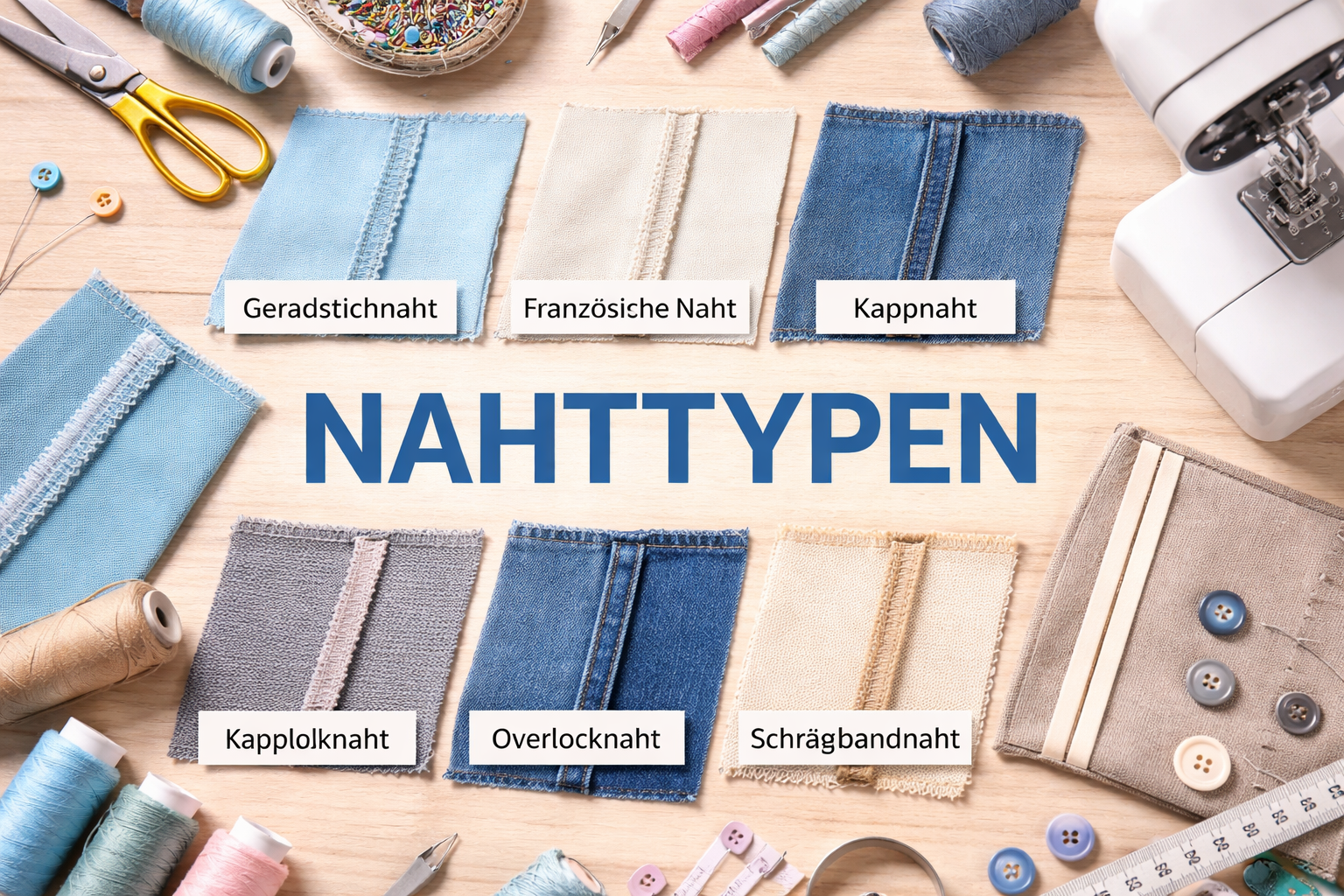
Nahttypen refer to the different types of seams used in sewing and textile construction to join two or more pieces of fabric. Each seam type is designed for a specific purpose, such as enhancing durability, improving appearance, or accommodating fabric behavior. (According to textile engineering standards)
Nahttypen are the various seam types used in sewing to join fabric pieces. Common examples include plain seams, French seams, and flat-felled seams. Each type serves a specific function, such as strength, flexibility, or clean finishing, depending on fabric type and garment requirements in textile production.
Why Nahttypen Matter in Sewing and Textile Industry
Nahttypen are a foundational element of garment construction and textile engineering. The choice of seam directly impacts:
- Durability (how long the garment lasts)
- Flexibility (how the fabric moves under stress)
- Appearance (visible vs hidden seams)
- Comfort (how seams feel against the skin)
In industrial production, incorrect seam selection can lead to:
- Fabric tearing
- Seam failure under stress
- Increased production costs
(According to garment manufacturing quality standards)
Basic Seam Construction Principles
Every seam, regardless of type, follows a few core construction principles:
| Principle | Explanation |
|---|---|
| Seam Allowance | Extra fabric between seam line and edge |
| Stitch Type | Lockstitch, chain stitch, or overlock |
| Fabric Compatibility | Matching seam to fabric behavior |
| Stress Distribution | Ensuring seam handles tension properly |
Key Characteristics of Nahttypen
1. Strength
- Determines how much stress the seam can handle
- Critical for workwear, denim, and upholstery
2. Flexibility
- Important for stretch fabrics like knitwear
- Prevents seam breakage during movement
3. Finish Quality
- Clean seams improve garment aesthetics
- Essential for luxury and delicate garments
4. Durability
- Long-lasting seams reduce wear and tear
- Depends on stitch density and seam structure
Quick Summary
- Nahttypen = seam types used in sewing
- Each type serves a functional purpose
- Impacts durability, comfort, and appearance
- Essential for both beginners and professionals
Main Types of Nahttypen Explained
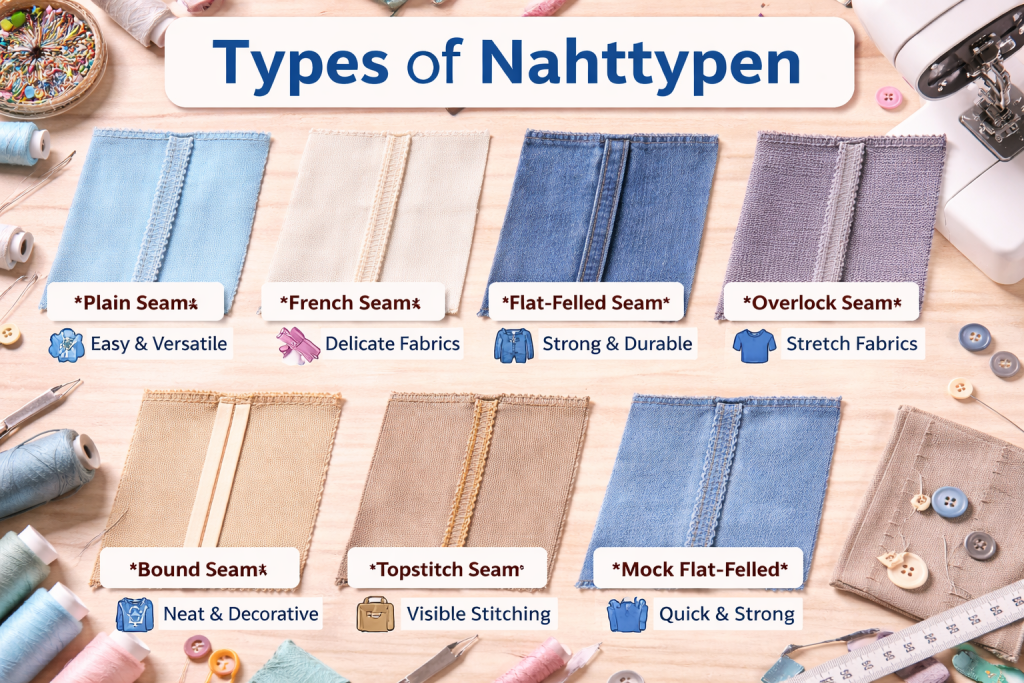
Understanding the main nahttypen is essential for selecting the right seam for any project.
Plain Seam (Standard Seam)
The plain seam is the most basic and widely used seam in sewing.
Key Features:
- Simple construction
- Fabric edges placed together and stitched
- Seam allowances usually pressed open
Best Uses:
- Everyday garments
- Lightweight to medium fabrics
- Beginner sewing projects
Limitations:
- Raw edges may fray if not finished
- Less durable under heavy stress
French Seam
A French seam encloses raw fabric edges inside the seam for a clean finish.
Key Features:
- Double-stitched seam
- No visible raw edges
- Elegant interior finish
Best Uses:
- Delicate fabrics (silk, chiffon)
- Lingerie and luxury garments
Limitations:
- Time-consuming
- Not suitable for thick fabrics
Flat-Felled Seam
The flat-felled seam is known for its strength and durability.
Key Features:
- Seam allowances folded and stitched down
- Reinforced structure
- Clean appearance on both sides
Best Uses:
- Denim (e.g., jeans)
- Workwear
- Heavy-duty garments
Limitations:
- Requires precision
- Slightly bulky
Overlock Seam
An overlock seam uses a specialized sewing machine to stitch and finish edges simultaneously.
Key Features:
- Prevents fraying
- Fast and efficient
- Flexible stitching
Best Uses:
- Knit fabrics
- Mass production
- Sportswear
Limitations:
- Requires overlock machine
- Less decorative
Bound Seam
A bound seam uses binding (fabric strip) to cover raw edges.
Key Features:
- Decorative finish
- Strong edge protection
- Clean interior look
Best Uses:
- Jackets and coats
- High-end garments
- Visible seam area
Limitations:
- Requires additional materials
- More time-intensive
Nahttypen Overview Table
| Seam Type | Strength | Flexibility | Appearance | Best Use |
|---|---|---|---|---|
| Plain Seam | Medium | Medium | Basic | Everyday clothing |
| French Seam | Medium | Low | Clean/Hidden | Delicate fabrics |
| Flat-Felled | High | Low | Structured | Denim, workwear |
| Overlock | Medium | High | Functional | Knitwear |
| Bound Seam | High | Medium | Decorative | Jackets, premium garments |
Applications of Different Nahttypen
Clothing and Fashion Industry
In fashion, nahttypen determine both functionality and aesthetics.
- Plain seams → used in mass-produced garments
- French seams → used in luxury apparel
- Flat-felled seams → used in jeans and uniforms
(According to apparel manufacturing practices)
Discover More About imsgtroid Guide 2026: Uses, Risks, Verification & Expert Insights
Upholstery and Home Textiles
In furniture and home décor:
- Strong seams are required to withstand pressure
- Flat-felled and bound seams are commonly used
Examples:
- Sofa covers
- Curtains
- Cushion covers
Industrial Textile Uses
Industrial textiles demand high-performance seams.
Common uses:
- Safety gear
- Automotive textiles
- Protective clothing
Requirements:
- High durability
- Resistance to stress and wear
Fabric-Specific Seam Selection
Different fabrics require different nahttypen:
| Fabric Type | Recommended Seam |
|---|---|
| Silk | French seam |
| Cotton | Plain seam |
| Denim | Flat-felled seam |
| Knit | Overlock seam |
Advantages and Limitations of Each Seam Type
Pros vs Cons Table
| Seam Type | Advantages | Limitations |
|---|---|---|
| Plain | Easy, fast | Frays easily |
| French | Clean finish | Time-consuming |
| Flat-Felled | Very strong | Bulky |
| Overlock | Flexible, fast | Needs machine |
| Bound | Decorative, durable | Complex |
Cost vs Performance Analysis
- Low-cost seams: Plain seams (fast production)
- High-performance seams: Flat-felled and bound seams
- Premium finish seams: French seams
(According to production efficiency benchmarks)
Best Practices for Choosing and Using Nahttypen
Matching Seam Type to Fabric
Always consider:
- Fabric weight
- Stretch level
- End-use of garment
Tools and Techniques
Essential tools:
- Sewing machine
- Overlock machine
- Pressing iron
Proper techniques:
- Maintain consistent seam allowance
- Use correct stitch length
- Press seams after stitching
Common Mistakes to Avoid
- Using weak seams for heavy fabrics
- Ignoring seam finishing
- Incorrect stitch tension
- Skipping fabric testing
Professional Sewing Tips
- Always test seams on scrap fabric
- Choose thread compatible with fabric
- Reinforce stress points
- Use appropriate seam finishing methods
Quick Takeaway
- Choose seam based on fabric + purpose
- Strong seams = durability
- Clean seams = better aesthetics
- Proper technique prevents failure
Advanced Techniques and Modern Innovations in Seam Types
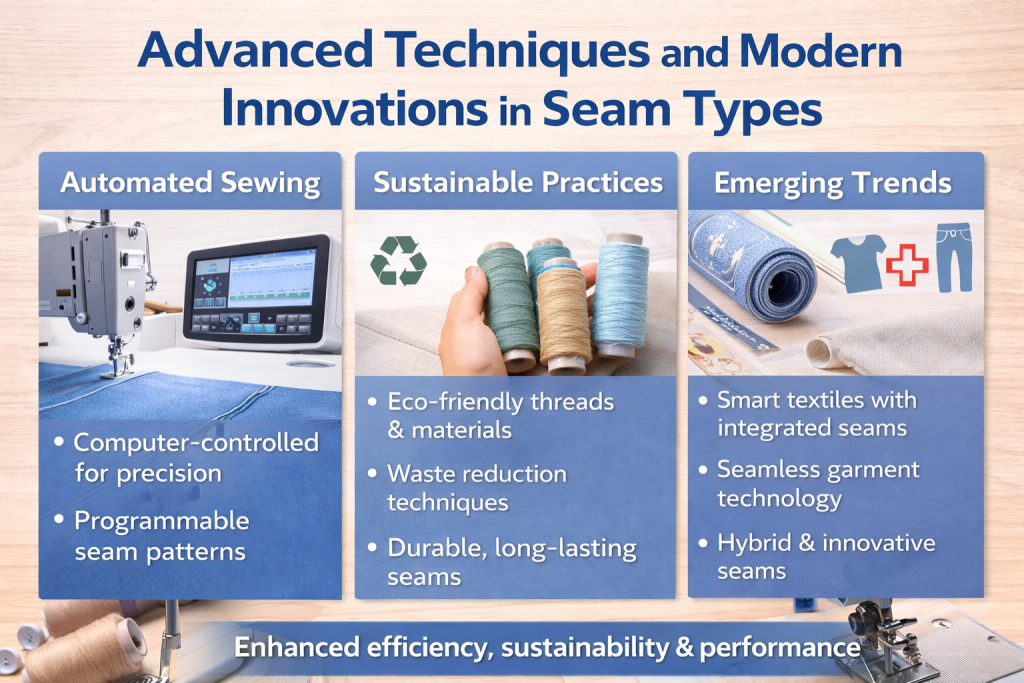
Modern textile production has significantly evolved, and seam types are now optimized through automation, precision engineering, and sustainability practices. Advanced seam technologies improve efficiency, consistency, and performance in both industrial and high-end garment manufacturing.
Automated Sewing Technologies
Automation plays a critical role in producing consistent and high-quality seams at scale.
Key Developments:
- Computer-controlled sewing machines ensure uniform stitch quality
- Programmable seam patterns reduce human error
- Integration with CAD systems for precise seam placement
Impact on Industry
| Factor | Manual Sewing | Automated Sewing |
|---|---|---|
| Speed | Low | High |
| Accuracy | Variable | Consistent |
| Cost Efficiency | Moderate | High (long-term) |
(According to industrial textile manufacturing benchmarks)
Sustainable Sewing Practices
Sustainability is becoming a key factor in selecting and applying seam types.
Practices:
- Use of eco-friendly threads and materials
- Minimizing fabric waste through efficient seam planning
- Durable seams to extend garment lifecycle
Industry takeaway:
Long-lasting seams reduce environmental impact by decreasing product replacement frequency. (Based on sustainable fashion data)
Trends in Textile Manufacturing
Emerging trends influencing seam construction include:
- Smart textiles with integrated seams
- Seamless garment technology
- Hybrid seam structures combining multiple techniques
These innovations are particularly relevant in sportswear, medical textiles, and performance apparel.
Seam Selection Guide for Different Use Cases
Choosing the correct seam type requires understanding the application, fabric behavior, and stress factors.
Step-by-Step Seam Selection Table
| Scenario | Fabric Type | Recommended Seam | Reason |
|---|---|---|---|
| Lightweight dress | Silk/Chiffon | French seam | Clean finish |
| Casual wear | Cotton | Plain seam | Cost-effective |
| Jeans | Denim | Flat-felled seam | High durability |
| Sportswear | Knit | Overlock seam | Flexibility |
| Jackets | Heavy fabric | Bound seam | Reinforced edges |
Quick Selection
- Delicate fabric → French seam
- Heavy-duty use → Flat-felled seam
- Stretch fabric → Overlock seam
- Everyday clothing → Plain seam
Common Mistakes and How to Avoid Them
Even experienced professionals can misuse seam types, leading to reduced garment quality.
Frequent Errors
- Using incompatible seam types for fabric type
- Ignoring seam allowance standards
- Overstretching seams during stitching
- Poor thread selection
Prevention Checklist
| Step | Action |
|---|---|
| 1 | Test seam on sample fabric |
| 2 | Adjust stitch tension |
| 3 | Match thread strength to fabric |
| 4 | Reinforce high-stress areas |
Expert Insights on Seam Performance
Performance Metrics
Key factors used to evaluate seam quality:
- Tensile strength
- Elastic recovery
- Abrasion resistance
- Seam efficiency
(According to textile testing standards)
Data-Driven Insight
- Flat-felled seams show highest durability in stress tests
- Overlock seams perform best in flexibility tests
- French seams rank highest in aesthetic quality
Conclusion
Seam types are a critical component of sewing and textile engineering, directly influencing garment durability, flexibility, and appearance. Selecting the correct seam type ensures optimal performance and long-term usability. From basic seams to advanced automated techniques, understanding seam construction enables better decision-making in both professional and personal sewing applications.
FAQs
What are seam types in sewing?
Seam types are different methods used to join fabric pieces, each designed for specific functions such as strength, flexibility, or clean finishing.
Which seam types are best for beginners?
Plain seams are the easiest option for beginners due to their simple construction and versatility.
What is the strongest seam type?
Flat-felled seams are considered the strongest option, commonly used in denim and workwear.
Which seam is best for delicate fabrics?
French seams are ideal for delicate fabrics because they enclose raw edges and provide a clean finish.
Are overlock seams necessary?
Overlock seams are essential for stretch fabrics and mass production, as they prevent fraying and allow flexibility.
How do seam types affect garment durability?
Proper seam selection improves durability by distributing stress evenly and preventing seam failure.
Can all seam types be done with a regular sewing machine?
Not all seam types can be done with a standard machine; overlock seams require a specialized overlock machine.
References
Textile Institute – Industry standards and textile research
https://www.textileinstitute.org ASTM International – Fabric and seam testing standards
https://www.astm.org ISO (International Organization for Standardization) – Global textile and manufacturing standards
https://www.iso.org American Association of Textile Chemists and Colorists (AATCC) – Textile testing and performance methods
https://www.aatcc.orgTextiles: Fiber to Fabric – Foundational textile knowledge
https://www.mheducation.com/highered/product/textiles-fiber-fabric-corbman/M9780073526477.html Fashion Institute of Technology (FIT) – Garment construction and design education
https://www.fitnyc.edu Sewing Pattern Review – Practical seam usage insights
https://sewing.patternreview.com
