
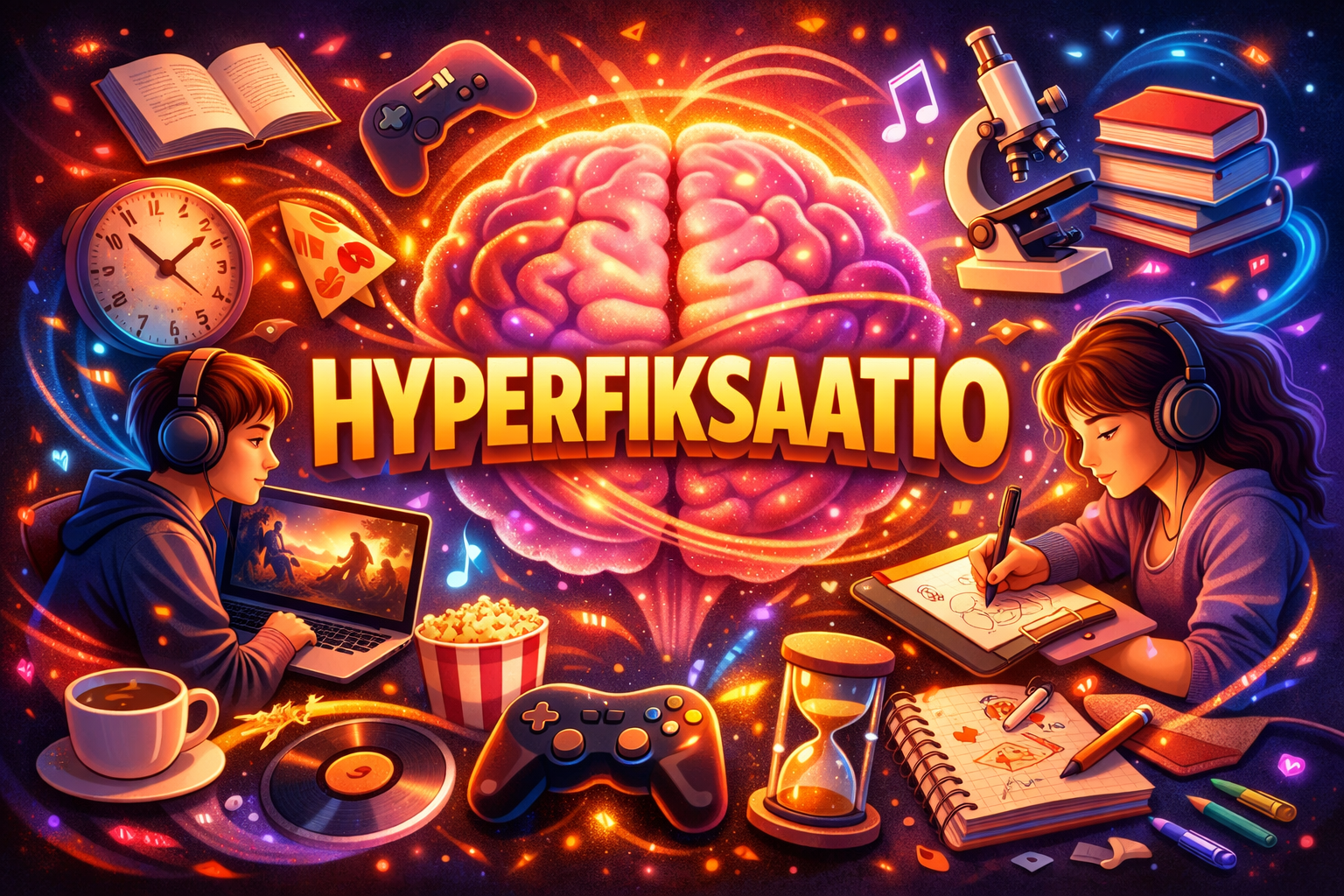
Hyperfiksaatio refers to an intense, narrow focus on a specific task, subject, or thought, often at the expense of other stimuli or responsibilities. Common in neurodivergent individuals, including those with ADHD and autism, it can affect time perception, social interactions, and productivity, sometimes yielding both positive and negative outcomes depending on context.
The term hyperfiksaatio describes a cognitive state where attention is extremely focused on one object or activity, making it difficult to shift focus. While it can enhance performance in certain tasks, it may also lead to neglect of other responsibilities.
It is often observed in individuals with:
- ADHD
- Autism Spectrum Disorder
Hyperfiksaatio is not merely intense concentration. Key characteristics include:
- Strong attachment to the object of focus
- Loss of awareness of surroundings
- Difficulty in shifting attention
This phenomenon can appear in work, study, hobbies, or digital activities, influencing both productivity and social interactions.
Quick Overview
| Attribute | Details |
|---|---|
| Definition | Intense, narrow focus on one task or topic |
| Common in | ADHD, autism, neurodivergence |
| Core Effect | Reduced awareness of surroundings |
| Potential Outcome | Enhanced task performance or neglect of other responsibilities |
Causes of Hyperfiksaatio
This cognitive phenomenon arises from a combination of neurobiological, psychological, and environmental factors, each influencing how attention is allocated and maintained over extended periods.
Neurodivergence
Certain neurodevelopmental differences make individuals more prone to prolonged, intense focus. Most commonly observed in people with:
- ADHD (Attention Deficit Hyperactivity Disorder): Neurochemical variations, particularly in dopamine pathways, affect the brain’s reward and attention systems. This can make engaging tasks feel more rewarding, leading to extended periods of concentration.
- Autism Spectrum Disorder: Many individuals exhibit deep interest in specific topics or activities, with heightened focus on detail and patterns. Differences in executive function allow them to maintain attention on preferred tasks for longer periods.
Other neurobiological mechanisms include:
- Dopamine regulation: Variations in dopamine levels can increase sensitivity to rewarding or stimulating activities, reinforcing sustained engagement.
- Neural reward circuits: Activation of these circuits strengthens the brain’s motivation to continue engaging in tasks perceived as meaningful or interesting.
- Executive function mechanisms: This cognitive system manages attention shifting, planning, and self-regulation. Differences here can make it harder to switch focus once attention is deeply concentrated.
Combined, these factors create a brain environment where certain tasks or stimuli dominate attention naturally, leading to prolonged engagement.
Cognitive Mechanisms
The way the brain processes rewards and motivation also plays a significant role. Key cognitive contributors include:
- Dopamine-driven reinforcement: When an activity triggers a dopamine response, the brain interprets it as rewarding. This strengthens focus and makes interruptions less noticeable or tolerable.
- Intrinsic motivation: Tasks that are inherently interesting or challenging sustain attention longer. People become absorbed in the task because it provides internal satisfaction, rather than relying on external prompts or incentives.
- Complexity or novelty of tasks: Activities that require problem-solving, creativity, or deep analysis engage higher-order cognitive functions. This makes the brain more likely to remain fixated on the task until it is completed or the cognitive reward diminishes.
These mechanisms explain why some tasks feel “effortless” during prolonged focus while others fail to capture attention, highlighting the selective nature of human cognition.
Environmental Triggers
External factors significantly influence the onset and duration of prolonged focus. Environmental conditions can either facilitate or limit sustained attention:
- Engaging or novel stimuli: Tasks or situations that are unusual, challenging, or highly interesting capture attention more easily than mundane or repetitive activities.
- Structured or solitary environments: Minimizing distractions and interruptions allows the brain to maintain uninterrupted focus. Quiet or controlled settings are particularly conducive to sustained engagement.
- Digital media and gaming platforms: Interactive content with continuous feedback, rewards, or challenges can trigger extended attention spans. Features such as progress tracking, scoring systems, or immediate gratification reinforce prolonged engagement.
Environmental triggers interact with neurobiological and cognitive mechanisms, creating conditions that make deep, sustained attention more likely.
Summary
In summary, prolonged, intense focus arises from the interplay of:
- Neurodivergence: Brain differences in ADHD, autism, and executive function impact sustained attention.
- Cognitive mechanisms: Reward systems, intrinsic motivation, and task complexity reinforce engagement.
- Environmental triggers: Stimuli, structured settings, and digital platforms can facilitate or enhance attention.
Understanding these causes helps explain why certain individuals experience extended focus more easily and why specific contexts encourage deep engagement while others do not.
Causes vs Effects Table
| Cause | Mechanism / Trigger | Effect on Hyperfiksaatio |
|---|---|---|
| ADHD / Autism | Dopamine regulation, executive function | Intense task focus |
| Cognitive reward system | Intrinsic motivation | Difficulty shifting attention |
| Environmental stimuli | Engaging tasks, digital media | Sustained attention for long periods |
Signs and Symptoms
Key symptoms include:
- Deep focus on a single task
- Neglect of external events or time
- Difficulty interrupting activity
- Emotional attachment or excitement during focus
- Occasional stress or frustration when interrupted
Symptoms Overview Table
| Symptom | Example |
|---|---|
| Intense focus | Working on a project for hours without noticing time |
| Reduced awareness | Ignoring phone calls or surroundings |
| Emotional engagement | Excitement or frustration tied to task |
| Task neglect | Forgetting meals or other responsibilities |
Positive and Negative Effects
Hyperfixation can produce both beneficial and adverse outcomes depending on context.
Positive Effects
- Enhanced productivity in focused tasks
- Rapid skill acquisition in areas of interest
- Increased creativity and problem-solving ability
- Improved attention to detail and accuracy
- Greater ability to complete complex or long-term projects
- Development of specialized expertise in niche areas
Negative Effects
- Disruption of daily routines or responsibilities
- Social or occupational challenges
- Stress, burnout, or fatigue when prolonged
- Difficulty transitioning between tasks or activities
- Neglect of personal health or self-care
- Potential strain on relationships due to limited social engagement
Positive vs Negative Effects Table
| Effect Type | Examples |
|---|---|
| Positive | Deep skill development, creative output |
| Negative | Missed deadlines, social disengagement |
Also Read: Afruimwagens: Definition, Types, Uses & Best Practices
Hyperfiksaatio in Daily Life
- Work / Study: Can improve output but risk neglecting other tasks
- Hobbies / Interests: Leads to mastery but may disrupt schedules
- Digital / Gaming Activities: Highly stimulating, can cause prolonged engagement
(Research indicates hyperfiksaatio can enhance performance in niche areas while reducing multitasking efficiency.)
Management Strategies
Effective approaches to managing hyperfiksaatio involve awareness, planning, and environmental adjustments.
Awareness and Mindfulness
- Recognize early signs
- Pause and reflect on focus intensity
- Use mindfulness techniques to reorient attention
Time Management Techniques
- Scheduled breaks and timers
- Task prioritization
- Segmenting work into smaller goals
Environmental Adjustments
- Minimize distractions during focus sessions
- Ensure critical responsibilities are scheduled separately
- Use structured routines to balance hyperfocus
Management Checklist Table
| Strategy | Purpose |
|---|---|
| Mindfulness / Awareness | Detect hyperfiksaatio early |
| Timers / Scheduled breaks | Prevent neglect of other tasks |
| Environmental adjustments | Control triggers and distractions |
Takeaway
Hyperfiksaatio is a complex cognitive phenomenon with both positive and negative impacts. It is strongly associated with neurodivergence, executive function, and environmental factors. Understanding its causes, signs, and management strategies allows individuals and professionals to leverage its benefits while minimizing potential drawbacks.
Advanced Insights, Management Strategies & Research on Hyperfiksaatio
Cognitive and Behavioral Implications of Hyperfiksaatio
Hyperfiksaatio is more than intense concentration; it reflects specific cognitive and behavioral patterns. Understanding these patterns helps individuals and professionals leverage hyperfiksaatio positively while minimizing potential negative consequences.
Key cognitive effects include:
- Attention allocation: Hyperfiksaatio prioritizes highly engaging stimuli, often suppressing awareness of other tasks.
- Reward sensitivity: Dopamine pathways reinforce continuation of preferred activities.
- Task absorption: Emotional involvement enhances skill acquisition but may reduce awareness of time or social cues.
According to the American Psychological Association, hyperfiksaatio is linked to both adaptive and maladaptive outcomes depending on context, particularly in neurodivergent populations.
Cognitive Effects Table
| Cognitive Aspect | Positive Effect | Potential Challenge |
|---|---|---|
| Attention Allocation | Deep task engagement | Reduced awareness of surroundings |
| Reward Sensitivity | Motivation to complete tasks | Difficulty switching tasks |
| Emotional Engagement | Skill mastery, creativity | Frustration if interrupted |
Practical Management Strategies for Hyperfiksaatio
Managing hyperfiksaatio requires structured techniques that balance focus with overall productivity. Individuals can benefit from understanding triggers and employing tools to regulate attention.
Awareness Techniques
Awareness is critical to managing hyperfiksaatio effectively. Techniques include:
- Maintaining a log of hyperfiksaatio episodes to identify patterns
- Using reminders or alarms to signal the end of a focus session
- Recognizing early signs of over-immersion, such as time loss or fatigue
These techniques enable individuals to harness hyperfiksaatio productively while preventing task neglect.
Time Management Approaches
Proper time management is essential in balancing with other responsibilities. Recommended strategies include:
- Segmenting tasks into manageable blocks to prevent over-focus
- Scheduling breaks using timers or apps to maintain balance
- Prioritizing critical responsibilities before indulging in prolonged focus periods
When applied correctly, time management reduces the potential negative effects of hyperfiksaatio while retaining its benefits for productivity.
Environmental Modifications
Environmental adjustments can prevent hyperfixation from interfering with daily obligations. These include:
- Reducing distractions in work or study areas
- Scheduling high-focus activities during energy peaks
- Establishing routines to ensure essential tasks are completed
By controlling environmental factors, individuals can maximize the productive potential of hyperfiksaatio without compromising other responsibilities.
Management Checklist Table
| Strategy | Purpose |
|---|---|
| Awareness Techniques | Detect early signs of hyperfiksaatio |
| Time Management Approaches | Maintain balance across tasks |
| Environmental Modifications | Reduce distractions and optimize focus |
Positive and Negative Outcomes of Hyperfiksaatio
Hyperfiksaatio can be both beneficial and challenging depending on the context. Recognizing the dual nature allows individuals to utilize it effectively.
Positive Outcomes
- Enhanced task performance: Hyperfiksaatio can enable deep focus for complex tasks.
- Rapid skill development: Extended concentration allows for mastery of specific skills.
- Increased creativity: Intense focus often fosters innovative problem-solving.
Negative Outcomes
- Neglect of responsibilities: Hyperfiksaatio can result in missed appointments, meals, or social interactions.
- Stress and fatigue: Prolonged episodes may lead to burnout or mental strain.
- Social challenges: Difficulty shifting attention can strain relationships in work or home environments.
Outcomes Comparison Table
| Outcome Type | Examples |
|---|---|
| Positive | Completing a complex project efficiently |
| Negative | Forgetting appointments or obligations |
Common Misconceptions About Hyperfiksaatio
- Not laziness or procrastination: Hyperfiksaatio is a neurological phenomenon, not a behavioral choice.
- Not always negative: In the right context, it can improve performance and learning.
- Occurs in all ages: While often observed in children, adults also experience hyperfiksaatio.
- Not voluntary: Individuals cannot easily switch off hyperfiksaatio once it begins.
Understanding these misconceptions helps in effectively managing hyperfiksaatio in professional and personal life.
Modern Research and Relevance
Recent neuroscience and psychology studies highlight hyperfiksaatio as a significant cognitive phenomenon:
- ADHD Research: Hyperfiksaatio is linked to dopamine regulation differences, enhancing sustained attention in certain contexts.
- Autism Research: Narrow focus on specific interests can increase learning, expertise, and creativity.
- Productivity Studies: Structured interventions such as breaks and time management enhance benefits and reduce negative consequences.
These studies confirm that hyperfiksaatio is not merely a behavioral quirk but a measurable cognitive state with practical implications.
Practical Applications in Daily Life
Hyperfiksaatio can be strategically leveraged in various settings:
- Work or Study: Assign complex or creative projects to periods of hyperfiksaatio.
- Hobbies and Personal Interests: Use intense focus to develop skills or knowledge deeply.
- Digital Activities: Gaming, coding, or digital content creation can benefit from structured hyperfiksaatio.
Best practices involve balancing hyperfiksaatio with other obligations to maximize productivity while avoiding neglect of responsibilities.
People Also Ask
What does hyperfiksaatio mean?
Hyperfiksaatio is intense, narrow focus on a task, thought, or activity, often at the expense of other stimuli or responsibilities.
Who experiences hyperfiksaatio?
Individuals with ADHD, autism, and other neurodivergent conditions commonly experience hyperfiksaatio, but it can occur in anyone during engaging tasks.
Is hyperfiksaatio the same as hyperfocus?
Yes, hyperfiksaatio is the Dutch term often used interchangeably with hyperfocus.
How can hyperfiksaatio be managed?
Through awareness, time management techniques, environmental adjustments, and structured breaks.
Can hyperfiksaatio be beneficial?
Yes, when managed properly, hyperfiksaatio can improve productivity, creativity, and skill acquisition.
Are there psychological studies on hyperfiksaatio?
Yes, research by the American Psychological Association and other neuroscience journals explores its cognitive and behavioral mechanisms.
Conclusion
Hyperfiksaatio is a complex and multifaceted cognitive phenomenon that influences attention, behavior, and productivity in significant ways. Its dual nature means that while it can lead to challenges such as task neglect, disruption of daily routines, or social disengagement, it simultaneously offers the potential for enhanced focus, accelerated learning, and advanced skill development. Individuals experiencing intense, prolonged concentration can achieve remarkable progress in specific tasks or projects, often reaching levels of precision, creativity, and innovation that might be difficult under normal attention patterns.
Applying structured management strategies is equally important. Techniques such as scheduled breaks, mindfulness practices, time management tools, and environmental adjustments allow for balanced productivity, reducing the likelihood of fatigue, stress, or social challenges. These strategies help ensure that periods of concentrated attention translate into meaningful outcomes rather than unintended consequences. Over time, consistent use of such approaches can foster greater self-awareness and cognitive control, improving overall performance and well-being.
In essence, hyperfiksaatio exemplifies the potential of the human mind to balance deep cognitive engagement with practical functionality. When harnessed mindfully, it transforms intense attention from a challenge into a strategic asset, enabling individuals to maximize productivity, creativity, and personal growth while maintaining control over daily responsibilities and social interactions.
References
ADHD – https://www.adhd.org
Autism Spectrum Disorder – https://www.autismspeaks.org
Executive Function – https://www.apa.org/topics/executive-function
American Psychological Association – https://www.apa.org
