
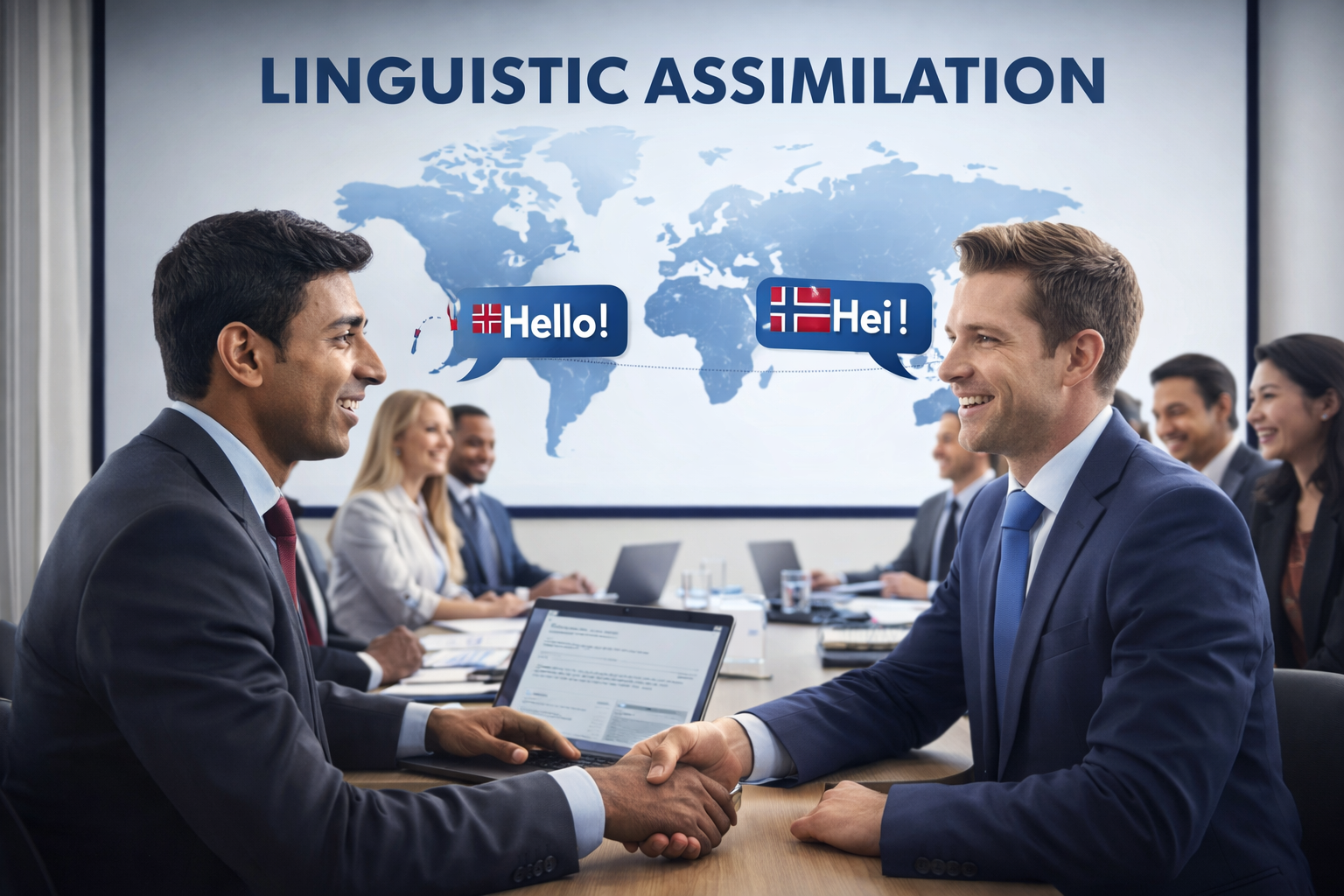
assimilasjon is the process by which individuals or groups adopt the cultural, linguistic, or social characteristics of a dominant group. It can occur in education, workplaces, or communities, influencing social cohesion and identity. While it promotes integration, it may raise debates about preserving original cultural heritage and promoting multicultural diversity.
Concept of assimilasjon
Linguistic Assimilation
Linguistic assimilation refers to adopting the language patterns of a dominant group. It often occurs when a minority group interacts extensively with speakers of another language, leading to:
- Vocabulary adoption
- Pronunciation alignment
- Grammar and syntax influence
For example, immigrant children in Nordic countries often undergo linguistic assimilation through school education, gradually aligning with the dominant language while still retaining some aspects of their native tongue.
Key points:
- Accelerates social integration
- Facilitates employment and education
- Can risk loss of native language proficiency if not balanced
Cultural Assimilation
Cultural assimilation involves adopting norms, values, customs, and lifestyle practices of the dominant society. This can include:
- Celebrating local festivals
- Adjusting dietary habits
- Following dress codes or etiquette norms
Cultural assimilation helps newcomers navigate social structures, reducing friction and fostering inclusion. However, excessive assimilation can lead to erosion of cultural identity, a challenge often addressed in multicultural policies.
Social and Ethnic Integration
Social assimilation refers to participating fully in societal systems, such as:
- Employment opportunities
- Education participation
- Civic engagement
Ethnic assimilation occurs when minority groups adopt practices and behaviors of the majority to blend socially, which can strengthen cohesion but may sometimes generate tension with identity preservation.
Summary Box: Key Understanding of assimilasjon
- Linguistic: Adopting language
- Cultural: Adopting customs, norms, and lifestyle
- Social/Ethnic: Participating in social and civic systems
- Promotes integration, but may challenge cultural preservation
Table 1: Types of Assimilasjon
| Type | Description | Benefits | Potential Challenges |
|---|---|---|---|
| Linguistic | Adopting language patterns | Communication, education, employment | Risk of native language loss |
| Cultural | Adopting norms, customs, and behaviors | Social acceptance, easier integration | Cultural identity erosion |
| Social/Ethnic | Engaging in societal systems | Social cohesion, civic participation | Tension with minority traditions |
Importance of Context in Understanding assimilasjon
The meaning of assimilasjon depends on context:
- Historical context: Early migration patterns and colonization influenced forced or voluntary assimilation.
- Modern context: Emphasizes voluntary integration while respecting cultural diversity.
- Policy context: Governments implement programs to balance assimilation with multicultural inclusion.
For instance, Norway and Sweden have historically emphasized education-based assimilation, while also implementing multicultural policies to preserve linguistic and cultural diversity.
Linguistic Roots and Semantic Connections
- The term “assimilasjon” is derived from Latin assimilare, meaning “to make similar.”
- It is conceptually linked to:
- Acculturation – Exchange of cultural features
- Integration – Full participation without losing identity
- Multiculturalism – Coexistence of multiple cultural identities
This linguistic and semantic understanding helps clarify why the term is used in both social sciences and policy discussions.
Key Takeaways
- assimilasjon encompasses language, culture, and social behavior adoption.
- Promotes integration and cohesion but may raise challenges for cultural preservation.
- Understanding context—historical, modern, and policy—is crucial to accurately interpret the term.
- Its connection to acculturation and multiculturalism highlights its sociological relevance.
Also Discover About: yalla choy – Meaning, Cultural Significance, and Tea Traditions
Historical and Sociological Context of assimilasjon
Assimilation in Migration History
Historically, assimilasjon has often occurred as minority groups interact with a dominant society. Key examples include:
- Nordic Migration History: In Norway and Sweden, immigrant groups have historically experienced language and cultural assimilation through schools and local community programs. Children adopted the Norwegian or Swedish language quickly, reflecting linguistic and educational assimilation.
- Colonial Contexts: Colonized populations were frequently expected to adopt the culture, language, and social norms of colonial powers, illustrating forced assimilation practices.
- Immigrant Communities in Europe and North America: Early 20th-century immigrants adopted dominant languages and customs to integrate socially and economically, often resulting in gradual loss of original cultural traits.
Assimilation in history demonstrates a spectrum: from voluntary adaptation to coerced cultural adoption, highlighting the sociological complexity of assimilasjon.
Examples from Nordic Countries
| Country | Assimilation Approach | Key Features | Modern Adaptation |
|---|---|---|---|
| Norway | Education-focused | Language programs for children; cultural orientation | Multicultural policies balance assimilation with heritage preservation |
| Sweden | Community integration | Vocational training, civic education | Supports bilingualism and cultural retention |
| Denmark | Social integration | Housing, workplace programs | Emphasizes inclusion while respecting minority traditions |
These examples illustrate how policy-driven assimilasjon seeks to integrate newcomers while addressing cultural preservation concerns.
Comparison with Multiculturalism
Assimilation vs Integration vs Multiculturalism:
| Concept | Definition | Goal | Challenges |
|---|---|---|---|
| Assimilation | Minority adopts dominant group traits | Social cohesion | Cultural identity loss |
| Integration | Participates fully in society while retaining cultural traits | Balance of cohesion & diversity | Requires supportive policies |
| Multiculturalism | Coexistence of multiple cultures with equal value | Cultural diversity preservation | Potential social segmentation |
Assimilasjon differs from multiculturalism by emphasizing similarity over coexistence, though modern policies attempt to combine integration with cultural respect.
Modern Applications of assimilasjon
Education and Language Policies
Schools play a central role in modern assimilasjon:
- Language acquisition programs for immigrant children ensure academic success and social participation.
- Cultural orientation classes familiarize students with social norms and legal frameworks.
- Bilingual education allows children to retain native language skills while learning the dominant language, mitigating cultural loss.
Example: In Norway, programs for immigrant children include Norwegian language lessons and cultural orientation, while preserving home languages through community programs.
Media and Cultural Representation
Media influences assimilasjon by:
- Providing exposure to dominant cultural norms and language
- Offering platforms for minority groups to showcase cultural heritage
- Promoting social cohesion through representation in TV, radio, and online content
For instance, local Nordic television often includes multilingual programs, supporting integration while valuing cultural diversity.
Workplace and Community Integration
Assimilation extends into workplaces and communities:
- Professional assimilation: Learning work culture, communication styles, and team norms
- Community participation: Engaging in local associations, volunteering, and civic activities
- Mentorship and networking programs: Facilitate smoother adaptation while encouraging cultural exchange
Studies show that workplaces supporting gradual assimilasjon improve employee retention, productivity, and satisfaction.
Common Misconceptions about assimilasjon
Confusion with Acculturation
- Acculturation: Mutual exchange of cultural traits between groups
- Assimilasjon: One group adopts the dominant group’s characteristics
- Many assume the terms are interchangeable, but assimilasjon implies dominance and adoption.
Misinterpretation as Cultural Erasure
- Assimilation is not always intended to erase culture; in modern contexts, it often focuses on integration and social cohesion.
- Policies now strive to balance participation with cultural preservation.
Linguistic vs Social Context
- Linguistic assimilation is often highlighted (learning the dominant language)
- Social assimilation involves adopting norms, values, and behaviors
- Confusion arises when linguistic success is assumed to equal full cultural assimilation
Quick Clarification
- Assimilasjon = adoption of dominant culture/language
- Acculturation = mutual cultural exchange
- Integration = participation while retaining heritage
Why assimilasjon Matters Today
Social Cohesion and Inclusion
- Facilitates communication and understanding across diverse populations
- Reduces social isolation among minority groups
- Supports equitable access to education, healthcare, and civic participation
Policy and Government Programs
Governments use assimilasjon strategies to:
- Provide language and cultural education
- Encourage workplace participation
- Facilitate community engagement
Example: Norway’s Introduction Program for Immigrants offers 2 years of language and civic training, promoting social cohesion and economic participation.
Globalization and Cultural Exchange
- Migrants increasingly navigate multiple cultural environments, requiring adaptive assimilation strategies
- Digital media accelerates exposure to dominant cultures while enabling minority groups to maintain cultural identity
- Modern assimilasjon balances integration, identity, and diversity
FAQs
1. What does assimilasjon mean?
It is the process by which individuals or groups adopt the cultural, linguistic, or social traits of a dominant group to integrate socially.
2. How does linguistic assimilation occur?
Through learning the dominant language, adopting pronunciation, grammar, and vocabulary while engaging in daily life and education.
3. What is the difference between assimilation and integration?
Assimilation emphasizes adopting dominant traits; integration focuses on participating in society while maintaining cultural identity.
4. Does assimilation erase original culture?
Not necessarily; modern approaches aim to balance assimilation with cultural preservation.
5. How is assimilasjon applied in education?
Through language programs, cultural orientation, and community engagement initiatives supporting social and academic integration.
6. Why is assimilasjon important in workplaces?
It helps employees adapt to organizational culture, promotes inclusion, and enhances productivity.
7. Can assimilasjon coexist with multiculturalism?
Yes, when policies support integration and respect for cultural diversity, assimilasjon complements multicultural frameworks.
References
UNESCO – Cultural diversity, integration, and assimilation policies
https://en.unesco.org/themes/cultural-diversity
Oxford University Press – Definitions and academic research on linguistic and cultural assimilation
https://global.oup.com/
Norwegian Centre for Multicultural Studies – Research on assimilation and integration in Nordic countries
https://www.hioa.no/en/research/ncm
Smithsonian Institution – Studies on social and cultural assimilation
https://www.smithsonianmag.com/
BBC – Articles on multiculturalism, assimilation, and social integration policies
https://www.bbc.com/news/world-
International Organization for Migration (IOM) – Migration, assimilation, and social cohesion reports
https://www.iom.int/
World Bank – Research on migration, integration, and social policy
https://www.worldbank.org/en/topic/socialdevelopment
