
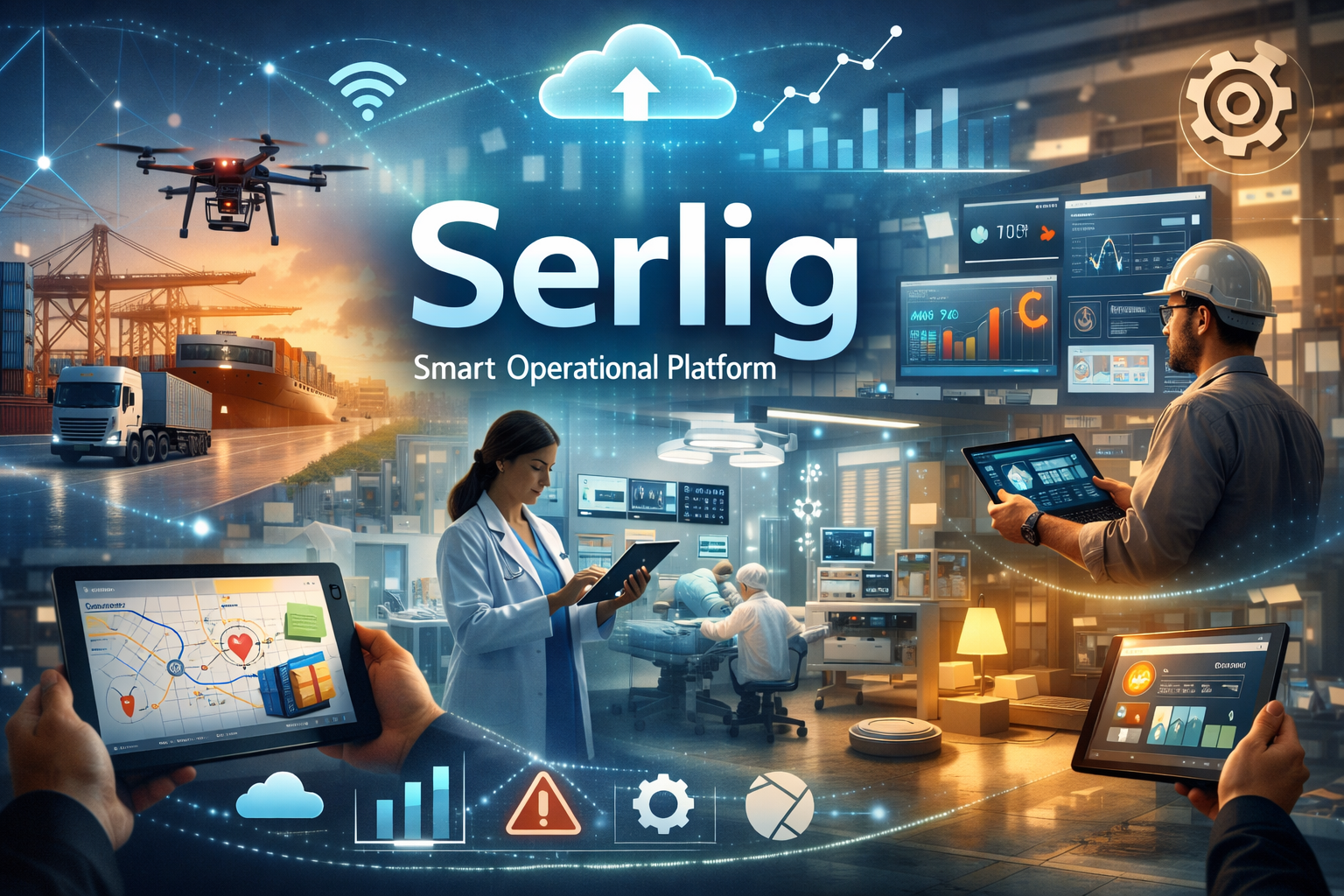
Serlig is an advanced platform designed to optimize operational efficiency using IoT sensors, data analytics, and predictive technologies. It enables real-time monitoring, workflow automation, and actionable insights, helping industries such as logistics, healthcare, and supply chain management improve performance, reduce costs, and maintain regulatory compliance.
Serlig is a digital operational platform that integrates technology, analytics, and process automation to streamline industry workflows. Its main purpose is to enhance efficiency, reduce human error, and enable data-driven decisions across multiple sectors.
Key components include:
- Real-time monitoring systems
- Data collection and reporting
- Predictive analytics for risk mitigation
- Integration with IoT and cloud platforms
By combining these technologies, Serlig provides visibility and control over complex operations, replacing manual monitoring with a centralized and proactive management approach.
Smart Operational Platform
- Real-time monitoring of workflows
- Predictive insights for risk management
- Automation to reduce manual intervention
- Centralized analytics for decision-making
Evolution from Traditional Systems
Traditional operational models rely on manual reporting, delayed responses, and reactive problem-solving. Serlig transforms this approach by offering continuous, automated, and predictive management.
| Feature | Traditional Approach | Serlig Approach |
|---|---|---|
| Monitoring | Periodic manual checks | 24/7 real-time monitoring |
| Response | Reactive | Predictive and preventive |
| Data Utilization | Limited reporting | Advanced analytics & insights |
| Error Reduction | Low | High (automation reduces human error) |
Key Transformation: From reactive management to intelligent, proactive operations.
Role of Digital Transformation in Serlig
It exemplifies digital transformation by enabling organizations to manage operations as connected, intelligent ecosystems.
Core capabilities include:
- IoT integration: Sensors and devices collect real-time operational data
- Cloud analytics: Centralized dashboards track metrics across multiple locations
- Predictive insights: Data-driven algorithms forecast potential risks
- Automation: Reduces manual intervention and accelerates response time
Implementing Serlig improves operational efficiency and accuracy, helping businesses proactively manage workflows and comply with industry standards (based on current IoT and analytics practices).
Key Features
Real-Time Monitoring
Serlig provides continuous oversight of operations through connected devices, allowing businesses to:
- Detect issues instantly
- Track performance metrics
- Ensure process consistency
Predictive Analytics
Using advanced algorithms, It can:
- Forecast operational bottlenecks
- Predict resource needs
- Identify risk patterns before problems occur
This reduces downtime and enhances productivity across the organization.
Automation and Workflow Optimization
Serlig automates repetitive tasks, such as:
- Data logging and reporting
- Alert generation for anomalies
- Process adjustments based on analytics
Key Advantage: Automation minimizes human error and speeds up decision-making.
Cloud-Based Integration
By leveraging cloud technology, Serlig allows:
- Remote access to operational data
- Multi-location monitoring
- Secure and scalable storage of performance data
Compliance and Reporting
Serlig simplifies adherence to industry regulations by providing:
- Audit-ready digital records
- Real-time compliance monitoring
- Automated reports for stakeholders
Summary:
- Proactive workflow management
- Real-time monitoring and alerts
- Data-driven decision-making
- Reduced manual effort and human error
- Compliance-ready documentation
Challenges and Considerations
Despite its benefits, It implementation requires attention to:
- Initial investment: Hardware, software, and integration costs
- Technical knowledge: Staff must be trained to operate the system
- Data dependency: Accuracy relies on continuous connectivity and sensor reliability
Pros vs Cons Table
| Pros | Cons |
|---|---|
| Real-time monitoring | Initial setup cost |
| Predictive insights | Technical complexity |
| Automation reduces error | Dependence on connectivity |
| Compliance-ready reports | Staff training required |
Key Takeaways
- Serlig transforms manual and reactive operations into automated, predictive workflows
- Real-time monitoring and IoT integration improve efficiency
- Predictive analytics helps prevent operational bottlenecks
- Cloud-based platform ensures multi-location management and scalability
- Successful adoption requires investment and technical readiness
Also Read: What Is Wollwirrware? Architecture, Features, Uses & Technology Guide
Real-World Applications of Serlig
The Serlig platform is designed to optimize operations across industries where efficiency, monitoring, and compliance are critical. Its digital, data-driven approach allows organizations to proactively manage workflows and reduce errors.
Logistics and Supply Chain
Use Cases:
- Real-time tracking of shipments and inventory
- Monitoring warehouse conditions via IoT sensors
- Predicting bottlenecks in delivery routes
Outcome: Faster, more reliable operations with reduced operational losses and optimized resource usage.
Healthcare Facilities
Applications:
- Monitoring critical equipment and processes
- Ensuring compliance with safety regulations
- Automating operational reporting
Benefit: Improves patient safety and operational efficiency while reducing manual workload.
Manufacturing and Industrial Operations
Applications:
- Continuous monitoring of production lines
- Predictive maintenance to prevent equipment downtime
- Automated performance analytics for quality control
Result: Reduced downtime, higher production efficiency, and improved product quality.
Hospitality Sector
Applications:
- Tracking guest services and housekeeping operations
- Monitoring facility conditions (temperature, hygiene, occupancy)
- Automated alerts for operational inconsistencies
Benefit: Enhances service quality, guest satisfaction, and regulatory compliance.
Comparison: Serlig vs Traditional Operational Systems
Comparison Table
| Feature | Traditional Systems | Serlig Platform |
|---|---|---|
| Monitoring | Periodic manual checks | Continuous real-time IoT monitoring |
| Response | Reactive | Predictive & preventive |
| Reporting | Manual logs | Automated, cloud-based dashboards |
| Error Reduction | Moderate | High (automation) |
| Data Analytics | Limited | Advanced predictive insights |
| Scalability | Low | Multi-location, cloud-enabled |
Summary
- Serlig enables proactive operational management
- Traditional systems are reactive and manual
- Data-driven insights improve accuracy, compliance, and efficiency
- Automation reduces human error
Best Practices for Implementing Serlig
Deployment Strategy
- Conduct a site or operational risk assessment
- Identify high-priority areas for monitoring
- Install IoT sensors and integrate with Serlig dashboard
- Train teams on platform usage
Monitoring Optimization
- Review dashboards regularly
- Adjust sensor placement based on operational data
- Use predictive alerts to prevent issues before they occur
Staff Training
- Train personnel on platform features
- Align workflows with digital alerts and recommendations
- Encourage data-driven decision-making
Expert Insight: Proper training and deployment increase ROI and ensure maximum platform effectiveness (based on digital workflow adoption standards).
KPIs and Performance Metrics
Monitoring KPIs is essential to measure Serlig’s effectiveness.
KPI Table
| KPI | Description | Importance |
|---|---|---|
| Operational Uptime | Percentage of uninterrupted operations | Indicates efficiency |
| Response Time | Time taken to act on alerts | Measures speed and reactivity |
| Error Rate | Number of operational errors | Tracks process reliability |
| Compliance Score | Adherence to regulatory requirements | Ensures audit readiness |
| Cost Savings | Reduction in losses and downtime | Measures ROI |
Key Takeaway
- Lower error rates = better workflow efficiency
- Faster response times = reduced operational risk
- High compliance score = audit readiness and reliability
Future Trends for Serlig
AI and Machine Learning Integration
- Advanced AI models will predict operational issues more accurately
- Automated decision-making will streamline processes further
- Continuous learning algorithms will improve efficiency over time
Industry-Wide Adoption
- Integration with smart infrastructure in logistics, healthcare, and manufacturing
- Multi-site management for large enterprises
- Standardization of digital operational monitoring
Sustainability and Environmental Monitoring
- Reduced energy and resource waste through predictive optimization
- Monitoring environmental conditions in warehouses and production lines
- Alignment with sustainability goals and regulatory mandate.
- Environmental and operational monitoring is becoming a mandatory standard in logistics, healthcare, and manufacturing (based on industry compliance practices).
Key Takeaways
- Serlig improves operational efficiency, accuracy, and compliance across industries
- IoT sensors and real-time analytics enable predictive workflow management
- Automation reduces human error and manual labor
- KPI monitoring ensures measurable ROI
- Future trends point toward AI-driven optimization and sustainable operations
FAQs
1. What is Serlig?
Serlig is a digital operational platform that uses IoT, data analytics, and predictive technology to optimize workflows, reduce errors, and improve compliance across industries.
2. How does Serlig improve operations?
It enables real-time monitoring, predictive alerts, automated reporting, and workflow automation, helping businesses proactively manage processes and reduce downtime.
3. Which industries use Serlig?
Logistics, healthcare, manufacturing, industrial operations, and hospitality are primary users due to their need for continuous monitoring and compliance.
4. Is Serlig cloud-based?
Yes. Serlig uses cloud integration for centralized monitoring, data storage, analytics, and remote multi-location access.
5. Can Serlig integrate with IoT devices?
Yes. IoT sensors feed real-time data into the platform for monitoring, predictive analytics, and automated alerts.
6. Does Serlig reduce human error?
Yes. Automation, predictive analytics, and real-time monitoring significantly minimize manual errors and improve workflow reliability.
7. What are the main challenges of implementing Serlig?
Implementation challenges include initial setup costs, staff training, technical complexity, and dependency on continuous data connectivity.
Conclusion
Serlig represents a significant evolution in operational management, moving industries away from traditional, manual, and reactive systems toward intelligent, data-driven, and proactive workflows. By combining IoT-enabled devices, predictive analytics, cloud-based dashboards, and automated workflow tools, It provides organizations with unparalleled visibility into their operations, allowing them to monitor processes in real time, forecast potential disruptions, and make informed decisions that enhance efficiency and reduce risk.
In sectors such as logistics, healthcare, manufacturing, and hospitality, Serlig’s digital infrastructure enables continuous monitoring of critical processes, minimizing downtime and human error while ensuring regulatory compliance. Predictive analytics within the platform identifies operational bottlenecks before they escalate into costly problems, allowing teams to act proactively rather than reactively. This capability not only saves time and resources but also enhances operational reliability, safety, and service quality.
Moreover, It supports sustainability initiatives by optimizing resource use, reducing waste, and minimizing environmental impact. Its cloud-based architecture ensures multi-location scalability, secure data storage, and centralized management, making it ideal for organizations of all sizes that operate in complex environments. By integrating automated alerts and workflow optimization, the platform also empowers staff to focus on higher-value tasks, reducing manual oversight and improving overall productivity.
Adopting Serlig is not just about technology—it is a strategic transformation. Organizations gain a competitive edge by leveraging real-time insights, predictive forecasts, and automated processes to maintain operational excellence. While implementation requires investment, staff training, and technical integration, the long-term benefits—measured in cost savings, improved operational efficiency, and compliance readiness—make it a highly valuable solution.
In conclusion, Serlig is more than a platform; it is a comprehensive operational ecosystem designed to modernize industries, enhance decision-making, and foster efficient, predictive, and sustainable management practices. As industries increasingly demand intelligent, connected, and automated solutions, It stands out as a leading tool to achieve these goals, offering measurable ROI and long-term operational resilience.
References:
Internet of Things
🔗 https://www.ibm.com/topics/internet-of-things
Data Analytics
🔗 https://www.ibm.com/topics/data-analytics
Predictive Analytics
🔗 https://www.ibm.com/topics/predictive-analytics
