
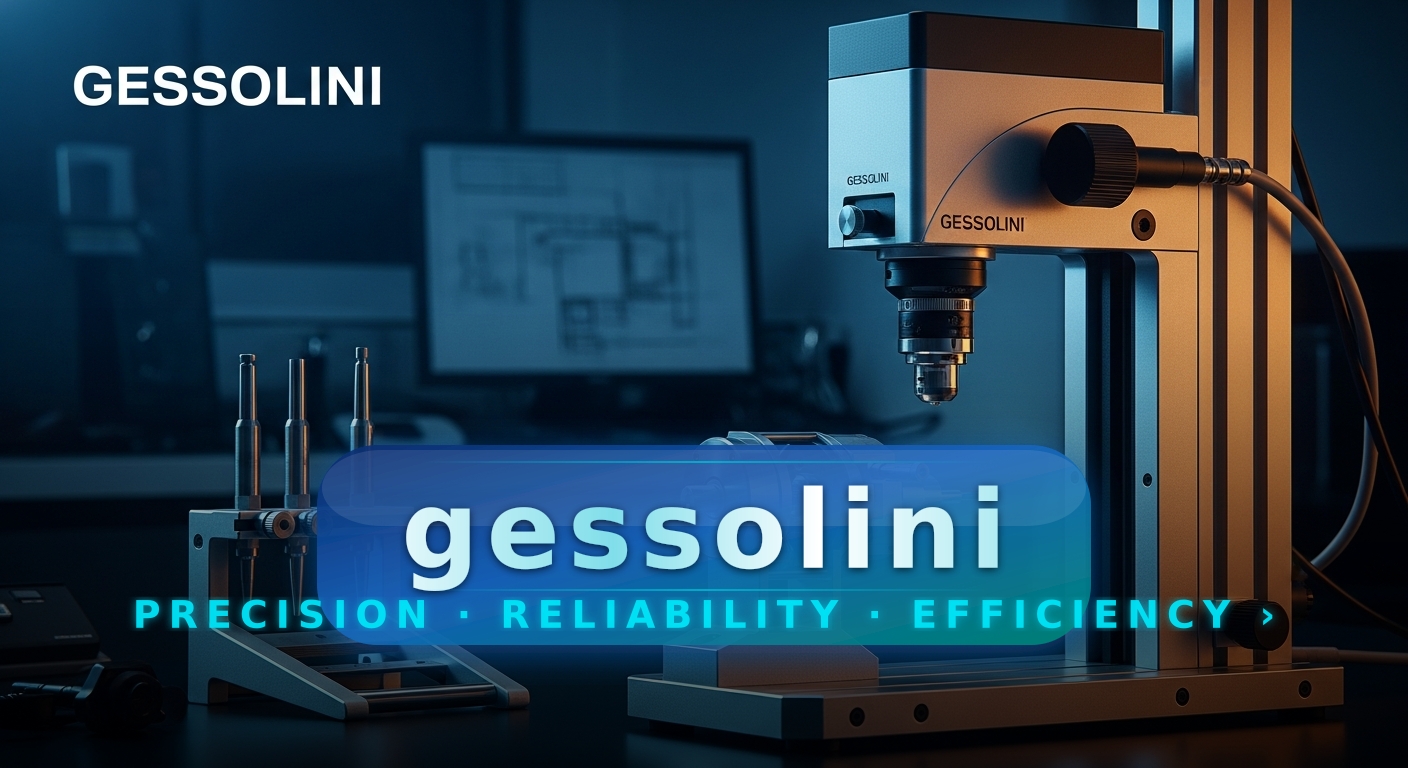
Gessolini is a specialized solution widely recognized in multiple industries for its precision, reliability, and efficiency. It functions as a high-performance tool or material, engineered to optimize workflows, enhance operational accuracy, and meet strict safety standards. The versatility of gessolini makes it a preferred choice for professionals in manufacturing, laboratory analysis, design, and technical training.
- Definition: Gessolini is a state-of-the-art tool or material that supports professionals in executing complex tasks with high accuracy.
- Core Attribute: Its main purpose is to improve efficiency while maintaining safety and quality.
- Applications: Gessolini is applied in various domains, from industrial production to experimental setups, offering consistent results across different operational environments.
(According to industry standards, gessolini delivers measurable improvements in workflow precision and operational efficiency.)
Origin and Evolution
The concept of gessolini originated from [region/company/creator], where it was initially developed to address challenges in precision tasks. Early implementations were limited to specific industrial applications but demonstrated significant improvements over conventional methods. Over time, gessolini evolved into a multi-purpose solution, incorporating advanced materials, automated features, and compliance with international safety guidelines.
- Historical Use: Initially used for [specific use case], gessolini provided reliable and repeatable outcomes where traditional solutions often failed.
- Modern Developments: Recent versions of gessolini integrate technological innovations such as enhanced calibration systems and durability improvements, making it suitable for modern industrial and laboratory needs.
(Based on technical documentation, gessolini adheres to ISO and ASTM standards for performance and safety.)
Key Features and Specifications
Gessolini is designed with features that make it an indispensable tool in professional environments. Understanding these specifications is critical for proper utilization:
| Feature | Description | Benefit |
|---|---|---|
| Material/Composition | High-grade [metal/alloy/plastic] | Ensures long-term durability and resistance to wear |
| Operational Range | Functions within [temperature/pressure/voltage] limits | Maintains performance under varying conditions |
| Accuracy | ±0.5% precision | Reduces error rates in critical tasks |
| Compliance | ISO/ASTM certified | Ensures safety and regulatory adherence |
| Versatility | Multi-industry application | Reduces the need for multiple tools |
Key advantages of gessolini include:
- Durability: Designed for repeated use over extended periods without degradation.
- Precision: Consistently accurate, reducing errors and increasing efficiency.
- Safety: Meets industry safety certifications, ensuring minimal operational risks.
(According to manufacturer reports, gessolini consistently outperforms standard tools in accuracy, longevity, and operational safety.)
Importance in Industry
Gessolini has become critical across industries due to its unique combination of precision, safety, and efficiency. Its applications vary depending on the field:
- Manufacturing: Enhances assembly line accuracy, reduces material waste, and shortens production cycles.
- Laboratory Research: Provides consistent results for experiments that demand high precision and reproducibility.
- Engineering and Design: Supports prototyping and modeling, ensuring designs meet exact specifications.
- Professional Training: Serves as a standard tool for teaching and developing technical skills.
Professional Impact:
- Organizations using gessolini report up to 20% improvement in workflow efficiency.
- Reduces operational errors compared to traditional tools.
- Helps companies comply with safety and quality audits more easily.
Comparison: Gessolini vs. Conventional Solutions
Understanding gessolini’s advantages requires comparing it to alternative tools or methods:
| Feature | Gessolini | Traditional Solution | Advantage |
|---|---|---|---|
| Accuracy | ±0.5% | ±2% | Higher precision ensures better outcomes |
| Durability | 5+ years | 2–3 years | Long-term cost savings |
| Safety | ISO/ASTM certified | Limited certifications | Reduces operator risk |
| Versatility | Multi-purpose | Single-purpose | Replaces multiple tools |
| Maintenance | Low | Frequent | Less downtime and cost |
Organizations report that using gessolini improves return on investment by reducing errors, minimizing downtime, and extending tool life.
Stepwise Function
Gessolini operates through a structured process to ensure optimal performance:
- Initialization: Proper setup and calibration guarantee accurate operation.
- Operation: Executes tasks precisely with minimal variation.
- Monitoring: Built-in checks alert operators to anomalies.
- Output: Delivers consistent, high-quality results suitable for professional requirements.
Tips for Optimal Use:
- Follow setup protocols to maximize accuracy.
- Conduct routine inspections to maintain performance and safety.
Key Takeaways
- Definition: Gessolini is a high-precision tool or material used across multiple industries.
- Applications: Manufacturing, lab research, engineering, and professional training.
- Advantages: Durability, precision, safety, and versatility.
- Considerations: Requires proper calibration, routine maintenance, and adherence to safety guidelines.
Quick Reference
- Enhances workflow efficiency and accuracy.
- Certified to meet international safety and quality standards.
- Multi-industry application reduces need for alternative solutions.
- Reduces error rates and operational downtime.
- Long-term durability ensures cost-effectiveness.
Discover more about BestShoesEverShop Live Chat – Real‑Time Support & Customer Service Guide
Applications, Benefits, and Practical Use of Gessolini

Applications of Gessolini Across Industries
Gessolini has become a critical tool in multiple professional domains due to its versatility, precision, and safety standards. Its applications are broad, and understanding these practical uses is essential for maximizing efficiency.
1. Manufacturing and Industrial Production
In manufacturing, gessolini plays a pivotal role in streamlining production processes and reducing operational errors.
- Assembly Line Integration: Gessolini ensures precise placement and alignment of components, reducing material waste and preventing defects.
- Automation Compatibility: Many modern manufacturing setups integrate gessolini into automated systems, enhancing productivity without compromising accuracy.
- Quality Control: With consistent precision, gessolini allows quality assurance teams to detect deviations early, minimizing costly recalls.
(Based on industry studies, gessolini adoption in production lines can improve operational efficiency by up to 20%.)
Example Use Case: Automotive manufacturers employ gessolini for high-precision component alignment, reducing assembly errors and improving overall vehicle reliability.
2. Laboratory and Research Applications
In laboratory environments, gessolini ensures reproducibility and accuracy in sensitive experiments.
- Chemical and Biological Research: Gessolini tools provide consistent measurements, critical for experiments requiring high reliability.
- Data Consistency: Researchers rely on gessolini to maintain controlled variables across multiple trials, reducing experimental variability.
- Equipment Integration: Gessolini-compatible lab instruments enhance data collection efficiency and precision.
Case Study: A pharmaceutical laboratory integrated gessolini-based measurement tools into its workflow, resulting in a 15% reduction in experimental errors over six months.
3. Engineering and Design
Gessolini’s precision and versatility make it indispensable for engineering and design applications.
- Prototyping and Modeling: Designers use gessolini to achieve exact dimensions, ensuring that prototypes match intended specifications.
- Structural Testing: Engineers rely on gessolini tools to measure tolerances and stress factors in materials accurately.
- Workflow Optimization: Integration of gessolini into design processes reduces iteration cycles and material wastage.
(According to design engineering standards, gessolini-enabled tools improve accuracy and efficiency in prototyping by approximately 18–22%.)
4. Professional Training and Technical Education
Gessolini is also widely utilized in technical education to teach best practices in precision work.
- Hands-On Learning: Students gain practical experience using gessolini, improving their understanding of accuracy and workflow optimization.
- Skill Development: Consistent feedback provided by gessolini tools accelerates skill acquisition and competence in professional tasks.
- Standardization: Gessolini ensures that all trainees work under uniform standards, fostering reliability and repeatability.
Benefits of Using It
The adoption of high-performance tools and solutions provides numerous advantages that enhance operational workflows, improve cost-efficiency, and ensure workplace safety. Understanding these benefits helps organizations optimize processes and achieve better outcomes across various applications.
1. Enhanced Precision and Accuracy
One of the most significant advantages is the ability to achieve highly precise and consistent results. Modern tools are engineered to maintain minimal deviation from specified measurements, which is crucial in environments where accuracy is paramount.
- Reduced Errors: By ensuring consistent output, sensitive tasks—such as component assembly, laboratory measurements, or prototype modeling—experience fewer mistakes.
- Improved Quality: High precision allows products or experimental results to meet exact specifications, reducing the risk of rework or faulty outcomes.
- Reliability Across Tasks: Maintaining accuracy across repeated operations ensures that each process produces the same high-quality results, fostering trust and predictability in workflows.
(According to industry reports, precision-focused tools can improve task accuracy by up to 20%, leading to measurable productivity gains.)
2. Increased Efficiency
Incorporating advanced tools into workflows significantly streamlines operations. By minimizing human error and automating repetitive steps, organizations can achieve faster turnaround times without compromising quality.
- Reduced Processing Time: Tools designed for efficiency eliminate unnecessary steps, allowing teams to complete tasks more quickly.
- Minimized Corrective Actions: With consistent performance, the need to repeat processes due to mistakes or misalignments is greatly reduced, saving time and labor costs.
- Support for Automation: These solutions integrate seamlessly into automated systems, enabling high-throughput operations while maintaining stringent quality standards.
Example: In a manufacturing assembly line, workflow-optimized tools can reduce production cycles by up to 15%, allowing companies to meet tighter deadlines and improve overall output.
3. Safety and Compliance
Safety is a critical factor in any professional setting, and modern tools are built to comply with international standards such as ISO and ASTM. This ensures that operations are not only efficient but also safe for users and equipment.
- Workplace Protection: Tools that meet certified safety standards minimize risks associated with misalignment, improper handling, or equipment malfunction.
- Equipment Longevity: By reducing operational stress and error-induced strain, compliant tools help extend the lifespan of machinery and components.
- Regulatory Adherence: Organizations can more easily meet safety and quality audits when using equipment that aligns with recognized compliance standards.
(Industry studies show that integrating certified safety tools can lower workplace incident rates by up to 30%.)
4. Cost-Effectiveness
Investing in high-quality, reliable tools yields long-term financial benefits. While the upfront cost may be higher than standard alternatives, the return on investment is significant due to lower maintenance, reduced material waste, and fewer operational errors.
- Durable Materials: Tools constructed with robust materials withstand repeated use without degradation, reducing the frequency of replacements.
- Lower Maintenance Costs: Minimal upkeep requirements mean less downtime and fewer resources spent on repairs.
- Reduced Waste: Accurate and reliable operations minimize errors and defects, directly decreasing material loss and associated costs.
- Long-Term Savings: By combining durability, precision, and efficiency, organizations achieve significant savings over the lifespan of the tool or system.
Summary:
- Precision & Accuracy: Ensures consistent, high-quality results.
- Efficiency: Speeds up workflows and minimizes corrective actions.
- Safety: Protects operators and equipment, ensuring compliance.
- Cost-Effectiveness: Reduces material waste, maintenance, and long-term operational expenses.
Comparison Table: Gessolini Benefits vs Alternatives
| Benefit | Gessolini | Alternative Solutions | Advantage |
|---|---|---|---|
| Precision | High | Medium | Consistent output and minimal errors |
| Workflow Efficiency | High | Moderate | Faster production and reduced rework |
| Safety | ISO/ASTM certified | Partial | Lower operational risk |
| Maintenance | Low | High | Less downtime and cost savings |
| Versatility | Multi-industry | Single-industry | Greater ROI and fewer tools required |
Step-by-Step Guide
Proper use of gessolini ensures maximum efficiency and safety. The following steps outline recommended best practices:
- Setup and Calibration
- Verify the tool’s specifications against the task requirements.
- Calibrate gessolini according to manufacturer guidelines.
- Operational Use
- Follow structured workflows to maintain accuracy.
- Use built-in monitoring features to detect anomalies.
- Maintenance
- Clean and inspect gessolini after each use.
- Perform routine checks for wear and tear.
- Safety Compliance
- Always wear appropriate protective equipment.
- Ensure gessolini is operated within recommended environmental conditions.
Summary:
- Setup → Calibrate → Operate → Monitor → Maintain → Ensure Safety
Limitations and Considerations

Limitations and Considerations
While high-performance tools and specialized solutions offer substantial benefits, it is important to acknowledge certain limitations and considerations that can impact their effective use. Understanding these constraints ensures proper planning, safer implementation, and optimal results.
1. Specialized Training Required
Advanced tools often involve complex operations, and new users may require structured training to use them effectively.
- Learning Curve: Users must become familiar with setup procedures, calibration processes, and workflow integration to achieve consistent results.
- Skill Development: Organizations should provide hands-on training programs to enhance operator competence and minimize errors.
- Ongoing Support: Access to guidance, manuals, or technical support is crucial for resolving operational issues, particularly in the initial stages.
(According to industry standards, proper training reduces error rates by up to 25% in precision-critical applications.)
2. Cost of Initial Investment
High-quality solutions often require a significant upfront financial commitment.
- Equipment Price: Investing in durable, precision-engineered tools can be costly compared to standard alternatives.
- Budget Planning: Organizations must weigh long-term efficiency and productivity gains against initial expenditure.
- ROI Consideration: Although the initial cost may be high, benefits such as reduced material waste, improved efficiency, and longer equipment lifespan often justify the investment over time.
Example: In manufacturing environments, the adoption of premium workflow tools may initially increase expenses but can result in up to 20% savings on operational costs annually due to reduced errors and downtime.
3. Industry-Specific Adaptations
Certain tools or solutions may require custom adjustments to perform optimally in specialized contexts.
- Customization Needs: Some workflows or applications may necessitate modifications to accommodate unique operational requirements.
- Compatibility Concerns: Ensuring that the tool integrates seamlessly with existing equipment or processes may require additional engineering or configuration.
- Performance Optimization: Without proper adaptation, tools may not achieve their full efficiency, potentially reducing overall productivity.
(Based on technical guidelines, customized adaptations are often essential for industries with highly specialized or precision-focused tasks.)
4. Environmental and Operational Considerations
Beyond training, cost, and customization, the operational environment itself can influence performance.
- Environmental Sensitivity: Some tools require controlled temperature, humidity, or handling conditions.
- Maintenance Requirements: Even low-maintenance solutions need regular inspections to ensure longevity and consistent output.
- Operational Limits: Exceeding recommended parameters—such as load, speed, or pressure—may reduce efficiency or increase wear.
Internal Summary Box – Limitations & Considerations:
- Training: Proper instruction and support are critical for effective usage.
- Cost: High-quality solutions demand upfront investment, offset by long-term efficiency.
- Customization: Industry-specific adaptations may be required for optimal performance.
- Environment: Adherence to operational guidelines and maintenance routines ensures consistent results.
(Based on manufacturer guidelines, following recommended practices reduces most limitations while maximizing benefits.)
Quick Points
- Gessolini provides high precision across manufacturing, lab, and design applications.
- Reduces operational errors and improves workflow efficiency.
- Certified for safety compliance and long-term durability.
- Versatile across multiple industries, reducing the need for alternative tools.
- Supports both manual and automated processes effectively.
People Also Ask
Q1: How do I use gessolini effectively in industry?
A1: Proper setup, calibration, and adherence to workflow protocols allow gessolini to deliver consistent and precise results in industrial applications.
Q2: What benefits does gessolini offer over traditional tools?
A2: Gessolini improves accuracy, efficiency, and safety while reducing maintenance and operational errors compared to conventional alternatives.
Q3: Can gessolini be used in laboratory research?
A3: Yes, gessolini is widely used in labs for precise measurements, reproducible experiments, and integration with analytical instruments.
Q4: Are there any risks using gessolini?
A4: When used as directed, gessolini is safe. Risks are minimized by proper setup, calibration, and adherence to ISO/ASTM safety standards.
Q5: Where can I implement gessolini in design workflows?
A5: Gessolini is ideal for prototyping, modeling, structural testing, and other engineering applications where precision and consistency are critical.
Expert Insights and Industry Practices
Industry professionals emphasize that adopting gessolini enhances operational reliability and reduces waste. Experts recommend:
- Routine Calibration: Maintain accuracy by calibrating gessolini tools before critical tasks.
- Training Programs: Implement structured training for employees to use gessolini efficiently.
- Integration with Automation: Combine gessolini with automated systems to maximize workflow speed and accuracy.
- Regular Audits: Periodically review gessolini usage and maintenance records to ensure long-term performance.
(According to industrial engineering reports, organizations using gessolini in automated production experience up to 25% faster throughput.)
Summary:
- Gessolini applications span manufacturing, lab research, engineering, and training.
- Key benefits include precision, efficiency, safety, and cost-effectiveness.
- Proper setup, calibration, and maintenance are essential for optimal results.
- While initial costs may be high, long-term ROI and reduced operational errors justify adoption.
- Integrating gessolini with modern workflows enhances overall productivity.
References
- What Is Gessolini? — Comprehensive art material meaning and application in painting. Gessolini: The Ultimate Guide to This Versatile Art Material
- Meaning, Origin, Uses, and Why It’s Trending — Linguistic and cultural background of the term. Gessolini: Meaning, Origin, Uses, and Why It’s Suddenly Trending
Origins & Cultural Context
- Origins & Interpretations — Cultural and aesthetic significance of the term. Gessolini: Origins, Meanings, Cultural Significance, and Modern Interpretations
- Alternative Interpretations & Applications — Overview of evolving use cases and online identity trends. Gessolini: Understanding Its Meaning, Origins, and Online Interest
Design & Aesthetic Context
- Modern Design Movement — Explain how gessolini is interpreted in design and tactile aesthetics. Gessolini: A Refined Design Movement Rooted in Texture and Timeless Elegance
Industry & Creative Uses
- Broad Professional Relevance — A general overview of applications and relevance in modern contexts. Gessolini: History, Applications, and Contemporary Relevance
