
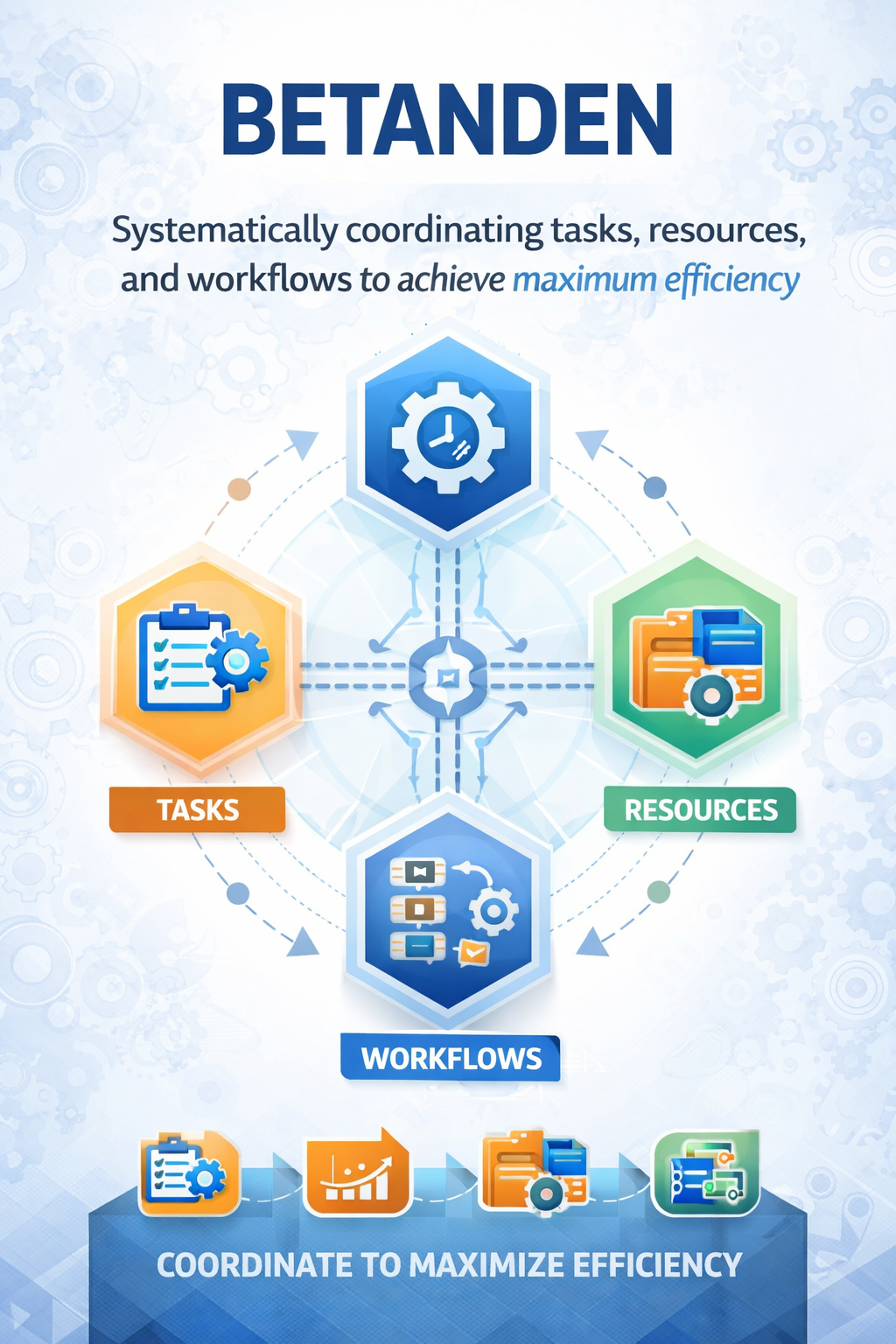
Betanden is a structured approach used in modern workflows and systems to optimize performance, align processes, and integrate multiple components. Its applications range from operational management to technical systems, providing measurable efficiency, consistent outcomes, and scalable solutions across industries and organizational structures.
Betanden refers to the process of systematically coordinating tasks, resources, and workflows within a framework to achieve maximum efficiency. It ensures alignment between multiple operations, enabling organizations to standardize processes, reduce errors, and improve overall productivity.
Key Features of Betanden:
- Task alignment across departments
- Resource optimization
- Structured workflow integration
- Scalability for complex operations
Key Takeways
- Betanden = Process coordination & optimization
- Improves system performance
- Reduces inefficiencies
- Enables scalability
Contexts Where Betanden is Applied
These frameworks have wide-ranging applications depending on industry needs:
Operational Context:
Workflows are aligned to ensure smooth execution. Departments experience reduced redundancies, improved coordination, and faster output.
Technical Systems:
In IT and engineering, software components and processes are integrated to maintain consistency, improve efficiency, and enhance overall system performance.
Regulatory or Compliance Environments:
Structured approaches provide a framework for compliance management, ensuring that all processes meet legal and operational standards while reducing risk.
Applications Table
| Context | Role of Betanden | Outcome |
|---|---|---|
| Operations | Align tasks and workflows | Increased efficiency |
| Technical Systems | Integrate software and hardware | Reduced errors |
| Compliance | Standardize documentation | Regulatory adherence |
| Business | Coordinate departments | Scalable operations |
How Betanden Works
The Betanden process typically follows a structured cycle:
- Assessment Phase:
Identify existing processes and evaluate inefficiencies. - Structuring Phase:
Apply Betanden to define workflows, assign responsibilities, and create alignment across teams. - Integration Phase:
Use Betanden to connect separate systems and ensure seamless communication. - Optimization Phase:
Implement continuous improvement based on performance metrics. - Monitoring Phase:
Track outcomes using KPIs to refine and sustain the benefits of Betanden.
Step-by-Step Example of Betanden
| Step | Description | Betanden Impact |
|---|---|---|
| Assess | Identify gaps | Clear understanding of inefficiencies |
| Structure | Align workflows | Coordinated operations |
| Integrate | Connect systems | Smooth performance |
| Optimize | Refine processes | Improved efficiency |
| Monitor | Track metrics | Continuous enhancement |
Insight: By following these steps, it enables organizations to maintain high efficiency and consistency, while also adapting to changing requirements.
Data-Driven Decision Making
Modern organizations rely heavily on structured data to guide decision-making. By analyzing performance metrics, trends, and operational outcomes, teams can identify inefficiencies, allocate resources effectively, and make informed adjustments. Data-driven strategies reduce guesswork and allow continuous refinement based on measurable results rather than assumptions.
Insight: Studies show that companies using structured data frameworks improve efficiency by up to 30% compared to organizations relying on intuition alone.
Cross-Functional Collaboration
Smooth coordination across departments is critical for operational success. When teams work in silos, communication gaps can create delays and inconsistencies. Structured approaches ensure all stakeholders follow the same processes, improving accountability, efficiency, and adaptability.
Practical Tip: Regular interdepartmental meetings and integrated workflow dashboards can enhance collaboration and prevent bottlenecks.
Core Benefits of Betanden
- Improved Efficiency:
Organizations that implement Betanden experience faster execution of tasks and better resource utilization. - Consistency:
Betanden ensures that repeated processes yield predictable and reliable outcomes. - Risk Reduction:
Standardized operations through Betanden reduce the likelihood of errors, compliance breaches, and operational mishaps. - Scalability:
Betanden frameworks allow organizations to expand operations without losing structure or control.
Betanden in Modern Workflows
Modern organizations increasingly rely for:
- Integration of multi-departmental workflows
- Automation and digital system alignment
- Performance measurement and KPI tracking
Scalability and Growth
Structured systems provide a foundation for scalable growth. By standardizing processes and aligning operations, organizations can expand into new markets, replicate successful workflows, and maintain consistency across teams and locations.
Insight: Businesses that implement structured frameworks are better equipped to manage growth without increasing complexity or losing operational control.
Quick Takeaways:
- It creates a unified operational framework
- It allows for continuous improvement and real-time adaptation
- Provides measurable performance results across industries
Challenges in Implementing Betanden
While It delivers multiple benefits, implementation requires careful planning:
- Initial Setup Effort: The framework needs detailed mapping of existing workflows.
- Cross-Departmental Coordination: Ensuring buy-in from all stakeholders is critical.
- Ongoing Monitoring: It is most effective with continuous tracking and adjustment.
Risk Management and Quality Control
Structured workflows help organizations identify potential risks early and implement controls to minimize impact. Clear responsibilities and defined procedures reduce errors, prevent compliance issues, and ensure consistent quality in outcomes.
Insight: Proactive risk management reduces disruptions and increases overall organizational resilience.
Best Practices for Using Betanden
- Map all processes before applying.
- Integrate tools and systems gradually.
- Use data to inform optimization.
- Monitor outcomes regularly and adjust workflows.
Continuous Improvement Loops
Ongoing feedback mechanisms are critical to long-term success. By collecting insights from employees, monitoring process metrics, and evaluating outcomes, organizations can continuously improve efficiency and effectiveness.
Key Takeaway: Regularly reviewing and adjusting processes ensures systems remain relevant, agile, and capable of meeting evolving operational demands.
Real-World Applications of Betanden
It is applied in multiple scenarios:
- Corporate Operations: Standardizing workflows across departments.
- IT Systems: Ensuring software modules and services work seamlessly.
- Manufacturing: Coordinating assembly lines for improved production efficiency.
- Healthcare: Streamlining patient care processes for consistent outcomes.
Insight: It supports integration, optimization, and alignment simultaneously, which is crucial for complex operational environments.
Also Read: Simbramento Explained – Meaning, Process, Applications & Benefits
Key Takeaways
- Betanden is a structured framework for coordination and optimization
- Ensures alignment across processes, systems, and departments
- Provides measurable benefits: efficiency, consistency, risk reduction, scalability
- Effective implementation requires assessment, structuring, integration, optimization, and monitoring
- Can be applied in operations, technical systems, legal compliance, manufacturing, and healthcare
Applications of Betanden
It is a versatile framework with wide-ranging applications across industries. Its ability to align processes, optimize performance, and integrate systems makes it invaluable for organizations seeking consistent and measurable outcomes.
Business and Operations
In business environments, It is applied to:
- Align multi-department workflows for better coordination
- Standardize repetitive tasks to improve productivity
- Facilitate smooth collaboration across teams
Technical and IT Systems
Within technical environments, It helps organizations:
- Integrate software tools, databases, and platforms
- Ensure smooth data flow and system interoperability
- Reduce operational downtime through structured coordination
Compliance and Legal Context
Betanden is also crucial in regulatory and compliance scenarios:
- Standardizes documentation and reporting
- Aligns operations with legal requirements
- Reduces risk of errors and non-compliance
Example: In financial or administrative organizations, Betanden frameworks improve audit readiness and consistency across regulatory processes.
Healthcare and Manufacturing
It applies effectively in both healthcare and manufacturing:
- Streamlines patient care processes for consistent outcomes
- Optimizes assembly line or production workflows
- Supports integration of multiple operational components for efficiency
Key Takeaway: It is adaptable, whether in high-complexity systems or workflow-heavy environments.
Fostering a Culture of Continuous Improvement
Encouraging a mindset of continuous improvement ensures that processes and systems evolve over time. Teams that actively participate in evaluating workflows, suggesting enhancements, and implementing changes contribute to sustained organizational growth. Continuous improvement also boosts employee engagement by involving staff in decision-making and problem-solving.
Key Takeaway: A culture focused on refinement and learning ensures long-term efficiency, adaptability, and operational excellence.
Applications Table
| Sector | Betanden Application | Outcome |
|---|---|---|
| Business | Workflow alignment | Increased productivity |
| IT Systems | System integration | Enhanced reliability |
| Compliance | Standardized procedures | Reduced risk |
| Healthcare | Patient care processes | Consistent outcomes |
| Manufacturing | Production optimization | Improved efficiency |
Betanden vs Related Concepts
Understanding how it compares to similar frameworks helps organizations decide when and how to implement it effectively.
Comparison Table
| Concept | Focus | Difference from Betanden |
|---|---|---|
| Workflow Management | Task coordination | Betanden integrates alignment and optimization across the system |
| Process Optimization | Efficiency improvement | Betanden adds structured framework and monitoring |
| System Integration | Connecting components | Betanden combines integration with performance tracking and alignment |
Strategic Resource Allocation
Efficient resource allocation is essential for maintaining productivity and controlling costs. By assigning personnel, time, and tools strategically, organizations can prevent bottlenecks, optimize workflow, and make the most of available resources. This ensures that critical tasks are completed efficiently while maintaining operational balance across departments.
Insight: Organizations that plan resource allocation carefully report higher output and reduced operational delays, contributing to overall organizational effectiveness.
Enhancing Organizational Adaptability
In dynamic environments, the ability to adapt quickly is critical. Structured systems provide a framework for organizations to respond to market fluctuations, regulatory changes, and technological advancements. Adaptability ensures continuity, minimizes disruption, and allows teams to implement improvements without compromising performance.
Key Takeaway: Maintaining flexible structures enables organizations to remain competitive while continuously evolving processes for long-term sustainability.
KPIs and Performance Metrics
Tracking Key Performance Indicators (KPIs) is essential for measuring the effectiveness of Betanden. Common metrics include:
- Task completion time
- Error rates
- Resource utilization
- Operational consistency
- Customer satisfaction
| KPI | Purpose | Impact |
|---|---|---|
| Completion Time | Measure efficiency | Faster execution |
| Error Rate | Accuracy | Reduced mistakes |
| Resource Use | Efficiency | Cost optimization |
| Consistency | Process standardization | Reliable outcomes |
| Satisfaction | Service quality | Improved experience |
Tip: Using KPIs alongside It ensures organizations can quantify benefits and refine processes continuously.
Monitoring Performance Metrics
Tracking performance metrics is essential for understanding how well processes are functioning. By regularly measuring outputs, error rates, and efficiency levels, organizations can pinpoint areas for improvement, make informed decisions, and maintain consistent standards. This structured approach to monitoring ensures that operational goals are consistently met and performance remains high.
Insight: Regular performance reviews enable proactive adjustments before minor issues escalate into major problems, saving time and resources.
FAQs
What is the main purpose of Betanden?
Betanden serves to align processes, integrate systems, and optimize performance for consistent and measurable outcomes.
In which industries is Betanden used?
Betanden is applied in business operations, IT systems, compliance, manufacturing, and healthcare for workflow and system improvement.
How does Betanden improve efficiency?
By standardizing tasks, aligning components, and integrating processes, Betanden reduces redundancies and accelerates workflow completion.
Is Betanden a single methodology or flexible framework?
It is a flexible framework that can be adapted to different organizational contexts while maintaining structured alignment and optimization.
Can small organizations benefit from Betanden?
Yes, even small teams can apply Betanden principles to improve process efficiency, reduce errors, and standardize operations.
Conclusion
Betanden is a powerful framework for structured coordination and process optimization, applicable across multiple industries and operational contexts. Its strength lies in combining alignment, system integration, and performance tracking into a single approach, providing measurable efficiency, reduced risk, and scalable solutions.
Organizations experience significant improvements in productivity, error reduction, and consistency. In technical environments, systems achieve seamless integration of platforms and tools. In business and administrative contexts, workflows become more streamlined and compliance is better maintained.
Beyond immediate operational gains, these structured approaches foster long-term adaptability, allowing organizations to respond to changing market conditions, technological advancements, and regulatory requirements. By continuously monitoring performance metrics and refining processes, organizations can ensure sustained growth and optimized outcomes.
Final Insights:
- Betanden improves efficiency while maintaining flexibility
- Aligns multiple components into a unified operational system
- Reduces errors and ensures consistency
- Supports scalability for future growth
- Encourages continuous improvement and data-driven decision-making
References:
Process Optimization-Explains structured approaches to improve workflows and efficiency.
Business Process Management-Covers modeling, analyzing, and improving processes for better operational outcomes.
Contract Law-Details how structured systems manage legal compliance and reduce operational risk.
