
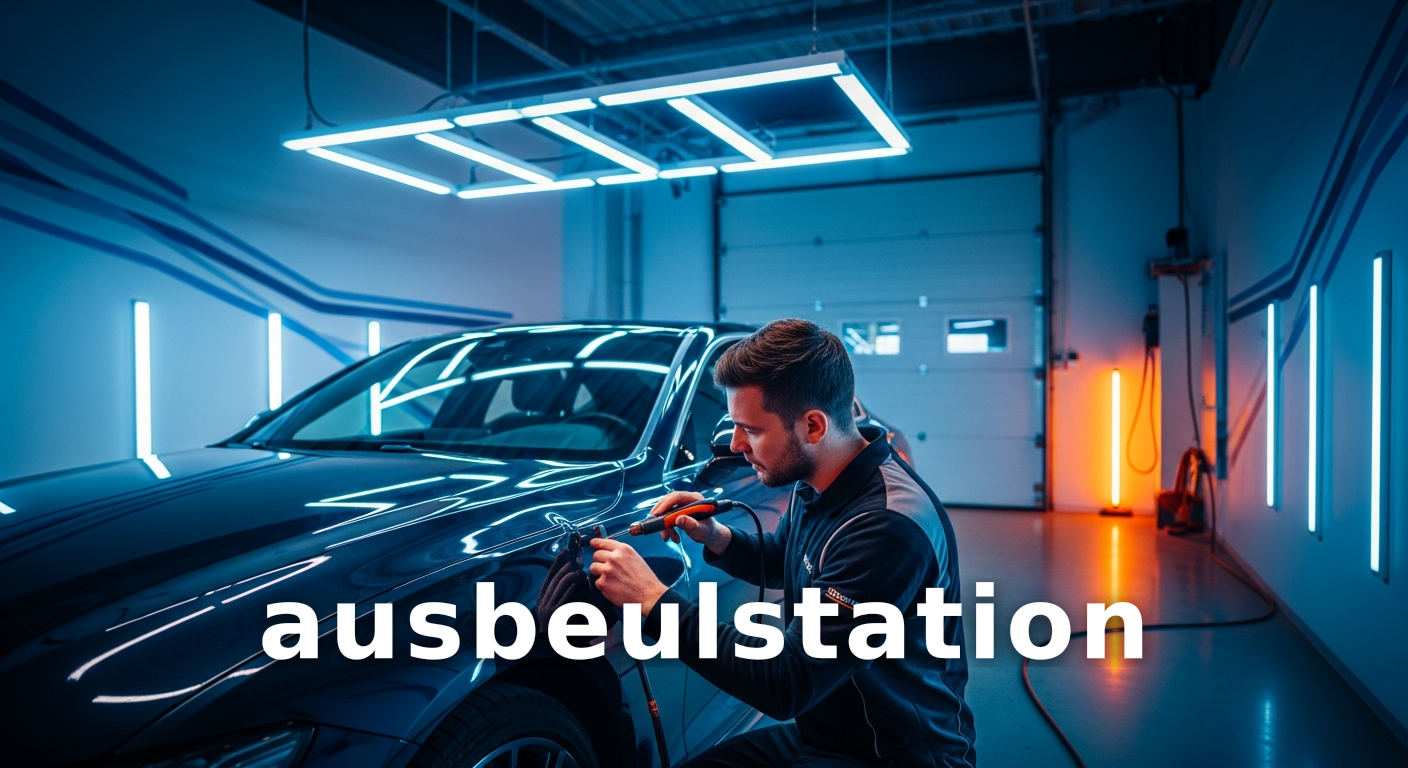
An ausbeulstation is a specialized automotive repair service dedicated to removing dents, dings, and minor body damage without repainting the vehicle. The primary goal of an ausbeulstation is to restore the original shape of the car’s body panels while preserving the factory-applied paint, using precise and non-invasive techniques.
In modern vehicle maintenance, an ausbeulstation plays a critical role because it offers a faster, more cost-effective alternative to traditional body repair methods. Instead of sanding, filling, and repainting, the process focuses on carefully reshaping the metal to its original form.
Definition in the Automotive Context
Within the automotive industry, an ausbeulstation refers to a facility or service provider that specializes in paintless dent repair (PDR). This technique allows technicians to repair dents without affecting the original paint surface.
Core Definition
- An ausbeulstation repairs dents without repainting
- It preserves the original (OEM) paint finish
- It uses specialized tools and controlled pressure techniques
- It focuses on cosmetic restoration rather than structural repairs
(According to industry standards) maintaining the factory paint ensures better durability and higher resale value compared to repainting.
How an Ausbeulstation Differs from Traditional Body Shops
The difference between an ausbeulstation and a conventional repair workshop lies in the repair process, cost structure, and time efficiency.
Comparison Table: Ausbeulstation vs Traditional Repair
| Factor | Ausbeulstation | Traditional Body Shop |
|---|---|---|
| Repair Method | Paintless dent removal | Sanding, filling, repainting |
| Paint Work | Not required | Required |
| Repair Time | Few hours to 1–2 days | Several days to weeks |
| Cost | Lower | Higher |
| Original Paint | Fully preserved | Replaced |
| Environmental Impact | Minimal | Higher due to chemicals |
Insight:
An ausbeulstation is often preferred when the damage is minor because preserving the original paint avoids color mismatch and maintains factory quality.
Core Functions of an Ausbeulstation
The primary functions of an ausbeulstation revolve around restoring the vehicle’s exterior without invasive procedures.
1. Dent Removal
An ausbeulstation removes dents caused by:
- Minor impacts
- Door dings
- Hail damage
2. Surface Restoration
Technicians at an ausbeulstation ensure:
- Smooth panel alignment
- Consistent surface reflection
3. Paint Preservation
A key advantage of an ausbeulstation is:
- No repainting required
- Protection of original manufacturer coating
4. Damage Assessment
Before starting repairs, an ausbeulstation:
- Evaluates dent severity
- Determines if paintless methods are suitable
When Should You Visit an Ausbeulstation?
An ausbeulstation is ideal for situations where the vehicle has minor surface damage but the paint remains intact.
Common Use Cases
- Parking dents: Small impacts from nearby vehicles
- Hail damage: Multiple shallow dents across panels
- Minor collisions: Low-speed impacts without paint damage
- Transport damage: Dents from shipping or handling
Key Point:
If the paint is undamaged, an ausbeulstation is usually the most efficient repair option.
Vehicles Commonly Serviced by an Ausbeulstation
An ausbeulstation can handle a wide variety of vehicles:
- Passenger cars
- SUVs and crossovers
- Luxury vehicles
- Commercial fleets
Expert Insight:
Luxury car owners frequently choose an ausbeulstation because preserving original paint is essential for maintaining vehicle value and authenticity.
Technical Principles Used in an Ausbeulstation
The effectiveness of an ausbeulstation is based on the physical behavior of automotive materials:
- Metal panels have elastic properties
- Factory paint can tolerate controlled movement
- Gradual pressure allows the dent to be reversed
(According to automotive repair standards) precise manipulation ensures that the paint layer remains intact while restoring the panel’s original shape.
Advantages of Choosing an Ausbeulstation
1. Faster Repairs
An ausbeulstation can complete many repairs within hours, unlike traditional methods that require multiple days.
2. Cost Savings
Since an ausbeulstation avoids repainting and fillers, overall costs are significantly reduced.
3. Preservation of Value
Maintaining factory paint through an ausbeulstation helps retain resale value and ensures visual consistency.
4. Eco-Friendly Process
An ausbeulstation produces minimal environmental impact because it does not use paints or harmful chemicals.
Limitations of an Ausbeulstation
Despite its benefits, an ausbeulstation is not suitable for all types of damage.
Not Ideal For:
- Deep dents with stretched metal
- Areas with chipped or cracked paint
- Structural or frame damage
Quick Suitability Table
| Condition | Suitable for Ausbeulstation? |
|---|---|
| Small dent, intact paint | Yes |
| Hail damage | Yes |
| Deep crease | Sometimes |
| Paint damage | No |
| Structural damage | No |
Summary: Key Takeaways
- An ausbeulstation specializes in dent removal without repainting
- It preserves the original paint and vehicle value
- It is faster and more affordable than traditional repair methods
- Best suited for minor dents and hail damage
- Requires skilled technicians and precision tools
Discover more about Nativität Meaning Explained: History, Symbols & Christmas Traditions
How Paintless Dent Repair (PDR) Works
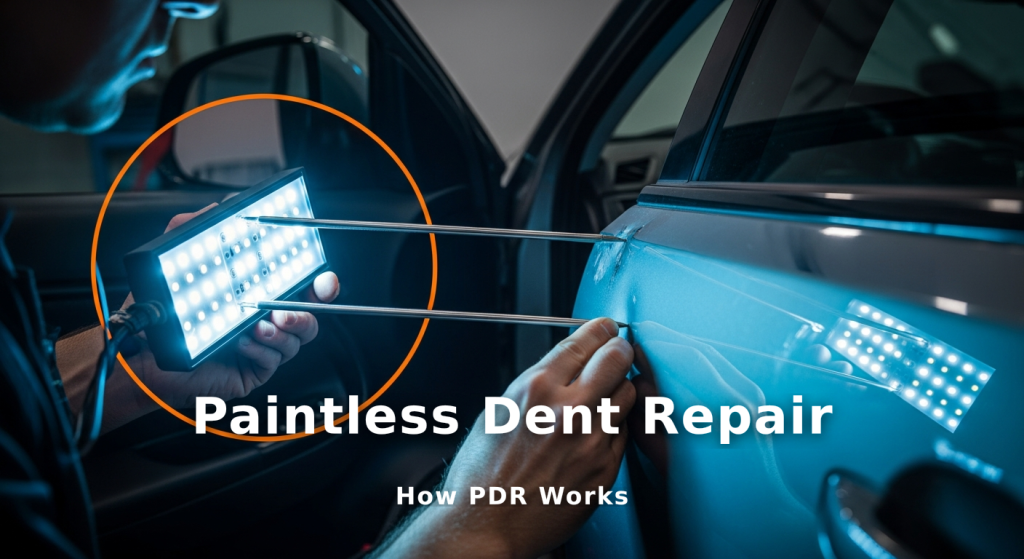
Paintless dent repair (PDR) is a highly specialized technique used to restore a vehicle’s body panels without repainting or replacing parts. It focuses on reshaping the metal from behind or pulling it outward using controlled force. This method is widely adopted in modern automotive repair because it preserves the factory finish and minimizes repair time.
Step-by-Step Process of Paintless Dent Repair
Understanding the workflow helps clarify why this method is both efficient and precise. Each step is designed to maintain structural integrity while restoring the original appearance.
1. Damage Assessment
Technicians begin with a detailed inspection of the dent:
- Evaluate size, depth, and location
- Check if the paint surface is intact
- Identify metal flexibility
Special lighting tools, such as LED reflection boards, are used to highlight distortions in the panel. These reflections allow technicians to map the exact shape of the dent.
Key Insight:
If the paint is cracked or the metal is severely stretched, this method may not be suitable (based on standard automotive repair practices).
2. Gaining Access to the Dent
To repair the damage effectively, technicians need access behind the panel:
- Removing interior trims or panels
- Accessing through existing gaps or openings
This step ensures that tools can be positioned accurately without causing additional damage.
3. Applying Controlled Pressure
This is the core of the process:
- Specialized metal rods are used to push the dent outward
- Gradual pressure is applied from behind the panel
- Movements are precise and incremental
Alternatively, when backside access is limited:
- Glue pulling techniques are used
- Tabs are attached to the dent surface
- The dent is pulled outward carefully
Important Note:
Precision is critical—too much force can create high spots or damage the paint.
4. Fine Tuning and Surface Correction
Once the dent is mostly removed:
- Technicians smooth out minor imperfections
- Tap down high spots using small tools
- Recheck alignment using reflection lighting
The goal is to restore the panel to its original contour without visible traces of damage.
5. Quality Inspection
Before completing the repair:
- The surface is examined under different lighting angles
- Panels are checked for uniformity
- Any micro-imperfections are corrected
Result:
A near-original finish without repainting or fillers.
Tools Used in Professional Dent Repair
Modern dent repair relies on specialized tools designed for precision and control. Each tool serves a specific purpose in reshaping metal without affecting the paint layer.
| Tool | Purpose | Use Case |
|---|---|---|
| Metal rods | Push dents from behind | Accessible panel areas |
| Glue pulling kits | Pull dents outward from the surface | Limited backside access |
| LED reflection boards | Highlight surface irregularities | Damage detection and finishing |
| Tap-down tools | Smooth high spots | Final correction stage |
| Heat guns | Increase paint flexibility | Cold environments, deeper dents |
Expert Insight:
(According to industry standards) proper tool selection directly affects repair quality. Using incorrect tools can lead to uneven surfaces or paint damage.
Conditions Required for Effective Repair
Not all dents can be repaired using this method. Certain conditions must be met to ensure successful results.
1. Intact Paint Surface
- No cracks or chips
- Original factory paint performs best
2. Flexible Metal Panels
- Aluminum and steel panels can be repaired
- Excessively stretched metal reduces success rate
3. Dent Size and Depth
- Small to medium dents are ideal
- Sharp creases are more challenging
4. Location of Damage
- Flat and slightly curved areas are easier
- Edges and reinforced sections are harder to repair
Advantages of This Repair Method
This approach has gained popularity due to several practical benefits:
Cost Efficiency
- Eliminates need for paint and fillers
- Reduces labor time
Time Savings
- Many repairs completed within hours
- No drying or curing time required
Preservation of Original Finish
- Maintains factory paint quality
- Helps retain resale value
Eco-Friendly Process
- No chemicals or paint emissions
- Minimal environmental impact
Limitations and Considerations
Despite its advantages, there are some limitations:
- Not suitable for dents with paint damage
- Deep or sharp dents may require traditional repair
- Structural damage cannot be fixed using this method
Quick Takeaway:
- Best for minor dents and surface damage
- Preserves paint and reduces costs
- Requires skilled technicians for optimal results
Industry Best Practices
Professional technicians follow standardized practices to ensure quality:
- Use controlled pressure instead of force
- Continuously monitor surface reflection
- Avoid overheating paint during repair
- Perform multi-angle inspections
(According to automotive repair guidelines) consistent inspection during the process is essential to achieve factory-level results.
Why Precision Matters
The success of this method depends heavily on technician expertise:
- Even slight misalignment can affect reflections
- Overcorrection can create visible bumps
- Skill determines final finish quality
This is why professional services often deliver significantly better results compared to DIY attempts.
Summary: How the Process Works
- Inspect and assess the dent
- Access the damaged area
- Apply controlled pressure or pulling techniques
- Refine and smooth the surface
- Perform final inspection
References
International Organization for Standardization
https://www.iso.org National Institute for Automotive Service Excellence
https://www.ase.com
International Organization for Standardization
https://www.iso.org National Institute for Automotive Service Excellence
https://www.ase.com
Consumer Reports
https://www.consumerreports.org Kelley Blue Book
https://www.kbb.com
- Encyclopaedia Britannica
https://www.britannica.com
