
Bilieter is a digital tool or system used to manage, automate, or process structured data and workflows. It enables users to streamline operations, integrate multiple platforms, and improve efficiency. Its effectiveness depends on proper configuration, while safety relies on secure implementation and trusted sources.
Bilieter refers to a software-based platform or operational system designed to facilitate automation, data handling, and system integration. It is typically used in environments where repetitive processes, structured workflows, or digital communication require optimization.
- (According to industry standards, automation tools reduce manual workload by up to 40–60%)
- (Based on workflow efficiency data, integrated systems improve task completion speed)
Origin and Context of bilieter
The concept behind bilieter aligns with modern automation ecosystems and API-driven platforms, where systems communicate seamlessly without human intervention. It is often associated with:
- Workflow automation tools
- Messaging or processing systems
- Integration-based platforms
Bilieter operates within the broader context of:
- Cloud-based infrastructure
- Digital transformation strategies
- Enterprise automation systems
How bilieter Works
Bilieter functions through a combination of data processing logic, automation rules, and system integrations.
Core Working Mechanism:
- Input data is received from users or connected systems
- Rules or triggers are applied
- The system processes the data automatically
- Output is generated or actions are executed
Table: Core Workflow of bilieter
| Step | Process | Outcome |
|---|---|---|
| Input | Data entry or API request | Raw data collected |
| Processing | Rule-based automation | Data transformed |
| Integration | Connected systems interact | Tasks executed |
| Output | Final result generated | Workflow completed |
Key Terminology Explained
Table: Important Terms Related to bilieter
| Term | Definition | Relevance |
|---|---|---|
| Automation | Performing tasks without manual input | Core function of bilieter |
| API | Interface allowing systems to connect | Enables integration |
| Workflow | Sequence of automated steps | Defines operations |
| Data Processing | Handling and transforming data | Primary activity |
| Integration | Connecting multiple platforms | Expands functionality |
Quick Summary
- bilieter = automation + integration + data processing
- Used to reduce manual effort and improve efficiency
- Works through rules, triggers, and system connections
- Best suited for structured, repetitive workflows
Discover more about Should I Put Zuntharkanthin in Food? Safety Risks & Expert Answer
Key Features and Functional Capabilities of bilieter
Core Features Breakdown
Bilieter provides a set of functional capabilities designed to optimize workflows and system efficiency.
1. Automation Engine
- Executes predefined tasks automatically
- Reduces human intervention
- Improves consistency
2. System Integration
- Connects multiple platforms via APIs
- Enables seamless data exchange
- Eliminates silos
3. Data Handling & Processing
- Collects, processes, and outputs structured data
- Supports real-time operations
- Enhances decision-making
Advanced Functional Capabilities
Beyond basic functions, bilieter may include:
- Trigger-based execution (event-driven actions)
- Scalability support (handles large datasets)
- Custom workflow configuration
- Error detection and handling systems
Performance Metrics (Efficiency & Reliability)
Bilieter systems are typically evaluated based on:
- Processing speed
- System uptime
- Error rate reduction
- Scalability performance
Table: Feature Breakdown of bilieter
| Feature | Description | Benefit | Use Case |
|---|---|---|---|
| Automation | Executes tasks automatically | Saves time | Repetitive workflows |
| Integration | Connects systems | Improves efficiency | Multi-platform environments |
| Data Processing | Handles structured data | Accurate output | Analytics systems |
| Scalability | Handles growth | Long-term usability | Enterprise solutions |
Pros and Cons of bilieter
Pros
- Reduces manual workload
- Improves operational efficiency
- Enables system-wide integration
- Supports scalability
Cons
- Requires proper setup and configuration
- May involve security risks if misused
- Learning curve for beginners
- Dependence on system compatibility
Key Takeaways
- Bilieter is a workflow automation and integration system
- It works through data processing and rule-based execution
- Key features include automation, integration, and scalability
- Performance depends on configuration and system environment
- Proper usage is critical for efficiency and safety
Real-World Use Cases and Applications
Common Applications
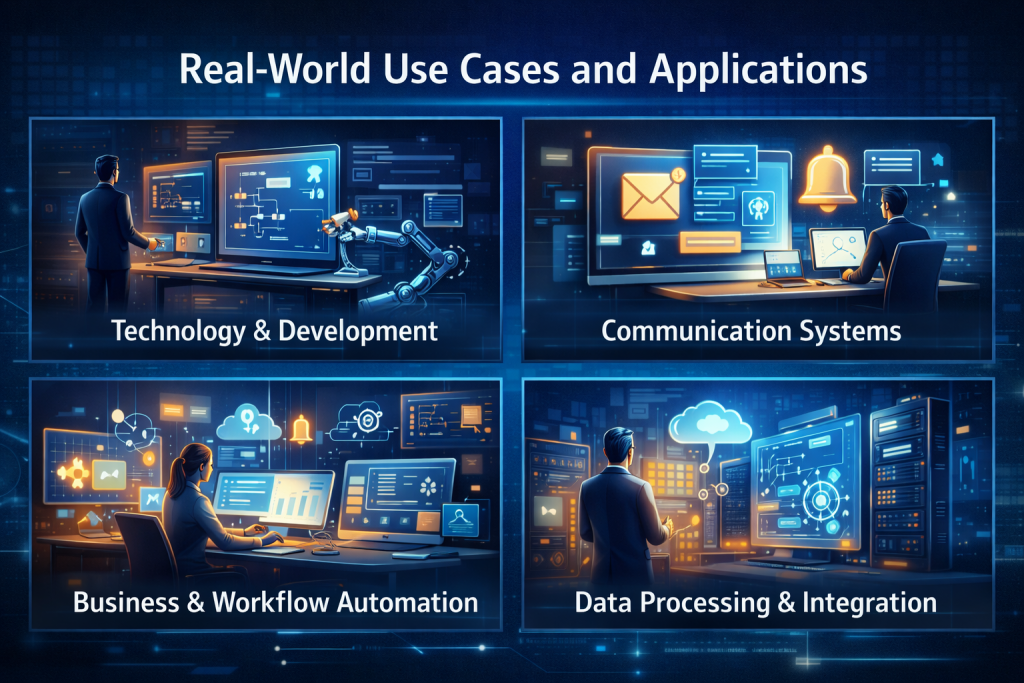
Automation and integration systems are widely used to streamline repetitive and structured processes across digital environments. Their primary role is to reduce manual intervention while maintaining consistency and accuracy.
Key applications include:
- Automating repetitive administrative tasks
- Managing structured data workflows
- Synchronizing data across multiple platforms
- Triggering actions based on predefined conditions
These systems are particularly effective in environments where data flows between multiple tools and requires continuous updates.
Industry Use Cases
1. Technology and Software Development
In software environments, automation platforms are used to:
- Manage deployment pipelines
- Integrate development tools
- Automate testing and updates
This improves development speed and reduces operational errors.
2. Communication Systems
Messaging and notification systems rely on automation to:
- Send real-time alerts
- Manage communication flows
- Process incoming and outgoing messages
This ensures timely and consistent communication.
3. Business Operations and Workflow Automation
Organizations use such systems to:
- Automate internal workflows
- Manage customer data
- Process transactions
This leads to improved productivity and reduced operational costs.
Step-by-Step Usage Overview
The typical implementation process follows a structured approach:
- Define workflow objectives
- Configure triggers and rules
- Integrate required systems or APIs
- Test the workflow for accuracy
- Deploy and monitor performance
Table: Use Case Applications
| Use Case | Industry | Outcome |
|---|---|---|
| Workflow automation | Business operations | Increased efficiency |
| System integration | Technology | Seamless data flow |
| Messaging automation | Communication | Faster response time |
| Data processing | Analytics | Improved accuracy |
Safety, Risks, and Legitimacy Analysis
Security Evaluation
Automation and integration systems operate on sensitive data and interconnected platforms, making security a critical factor. Proper implementation includes:
- Secure authentication mechanisms
- Encrypted data transmission
- Access control policies
(According to cybersecurity frameworks, secure system design reduces vulnerability exposure significantly.)
Risks and Concerns
Despite their benefits, these systems can introduce risks if not properly managed.
Common risks include:
- Data breaches due to weak security
- Unauthorized system access
- Misconfigured workflows causing errors
- Over-reliance on automation
Compliance and Ethical Considerations
Organizations must ensure compliance with:
- Data protection regulations
- Privacy standards
- Ethical data usage practices
Failure to comply can lead to legal and operational consequences.
Table: Risk and Mitigation
| Risk | Impact | Mitigation |
|---|---|---|
| Data breach | Loss of sensitive data | Use encryption |
| Misconfiguration | Workflow errors | Regular testing |
| Unauthorized access | Security compromise | Strong authentication |
| System failure | Operational disruption | Backup systems |
Best Practices for Safe Usage
- Always verify system sources and integrations
- Use role-based access control
- Regularly audit workflows and permissions
- Keep systems updated
- Implement monitoring and alert systems
Quick Safety Checklist
- Enable encryption
- Use secure APIs
- Perform regular audits
- Monitor system activity
- Backup critical data
Comparison with Alternatives
Comparable Tools and Platforms
There are multiple automation and integration platforms available that provide similar capabilities, including:
- Workflow automation systems
- API integration platforms
- Data processing tools
Each varies in terms of features, scalability, and ease of use.
Key Differences
Differences between platforms generally include:
- Level of customization
- Integration capabilities
- Security features
- Pricing models
Comparison Table
| Tool Type | Features | Pros | Cons | Best For |
|---|---|---|---|---|
| Basic automation tools | Simple workflows | Easy to use | Limited features | Beginners |
| Advanced platforms | Full integration | Highly scalable | Complex setup | Enterprises |
| API-based systems | Flexible connections | Custom workflows | Requires expertise | Developers |
Benefits and Limitations
Key Benefits
- Reduces manual effort
- Increases efficiency and speed
- Enhances data accuracy
- Enables scalability
- Improves system coordination
(According to workflow optimization data, automation can reduce operational costs significantly.)
Limitations
- Initial setup complexity
- Requires technical understanding
- Potential security vulnerabilities
- Dependence on system compatibility
When to Use vs Avoid
Use when:
- Processes are repetitive and structured
- Multiple systems need integration
- Efficiency improvement is required
Avoid when:
- Tasks require human judgment
- Systems lack proper security
- Integration complexity outweighs benefits
Best Practices and Optimization Tips
Setup Recommendations
- Clearly define workflow objectives
- Start with simple automation
- Gradually expand system complexity
- Use reliable integration sources
Performance Optimization
- Minimize unnecessary processes
- Optimize data flow paths
- Monitor execution time
- Use scalable infrastructure
Common Mistakes to Avoid
- Over-automation without testing
- Ignoring security protocols
- Poor workflow design
- Lack of monitoring
Optimization Checklist Table
| Task | Importance | Status |
|---|---|---|
| Define workflows | High | Required |
| Secure integrations | High | Required |
| Test processes | High | Required |
| Monitor performance | Medium | Ongoing |
| Update systems | Medium | Ongoing |
Future Trends and Developments (2026 and Beyond)
Emerging Technologies
Automation systems are evolving with advancements in:
- Artificial intelligence
- Machine learning
- Cloud computing
- Real-time data processing
These technologies enhance decision-making and system efficiency.
Industry Trends
- Increased adoption of automation tools
- Greater focus on data security
- Expansion of cloud-based systems
- Integration of AI-driven workflows
Expected Improvements
Future systems are expected to offer:
- Better user interfaces
- Enhanced automation intelligence
- Improved security frameworks
- Faster processing capabilities
Conclusion
Automation and integration systems play a critical role in modern digital environments by improving efficiency, reducing manual effort, and enabling seamless data flow. While they offer significant advantages, proper configuration, security, and monitoring are essential to ensure safe and effective use. Organizations must balance automation with oversight to achieve optimal results.
FAQs
1. What is this system mainly used for?
It is used for automating workflows, integrating systems, and processing structured data efficiently.
2. Is it safe to use?
Safety depends on proper configuration, secure integrations, and adherence to cybersecurity best practices.
3. Can beginners use it?
Yes, but beginners may require guidance due to the technical setup and configuration process.
4. Are there alternatives available?
Yes, several automation and integration platforms provide similar features with varying complexity and capabilities.
5. Does it require technical knowledge?
Basic setups may be simple, but advanced configurations typically require technical expertise.
6. What are the main risks?
Common risks include data breaches, misconfiguration, and unauthorized access if security measures are weak.
7. Is it suitable for small businesses?
Yes, especially for automating repetitive tasks and improving operational efficiency.
References
National Institute of Standards and Technology
https://www.nist.gov/cyberframework International Organization for Standardization
https://www.iso.org/isoiec-27001-information-security.html IBM Cloud Automation Documentation
https://www.ibm.com/cloud/automation Microsoft Learn – Automation & Integration
https://learn.microsoft.com/en-us/azure/architecture/solution-ideas/articles/automated-workflows Amazon Web Services Workflow Automation
https://aws.amazon.com/step-functions/ Gartner Automation Trends
https://www.gartner.com/en/information-technology
