
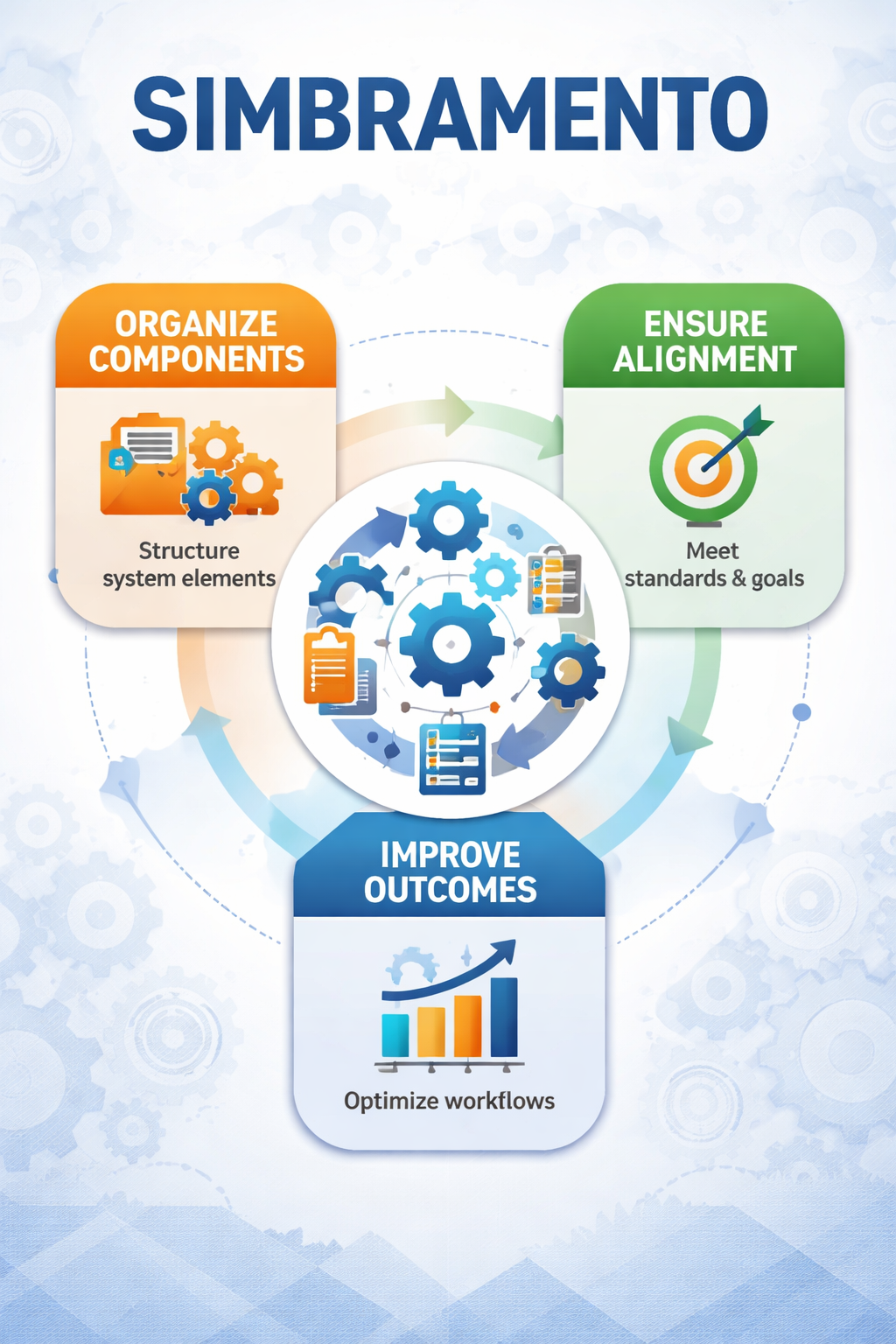
Simbramento refers to a structured process or concept used to organize, align, or optimize specific operations within a defined system, often in legal, technical, or operational contexts. It involves coordinating elements, ensuring compliance, and improving efficiency through a systematic approach tailored to the requirements of a particular industry or workflow.
Simbramento is a process-oriented concept that focuses on structuring, aligning, and optimizing workflows or systems to achieve better coordination and efficiency. While the term may vary depending on context, its core idea remains consistent:
- Organizing components within a system
- Ensuring proper alignment with defined standards or goals
- Improving operational outcomes through structured processes
Key Insight:
Simbramento acts as a framework for system organization, helping entities move from fragmented operations to coordinated and efficient workflows.
Simbramento = Structured Alignment Process
- Organizes workflows and systems
- Ensures consistency and compliance
- Improves operational efficiency
- Applies across multiple industries
Interpretation Across Contexts
Because Simbramento is not limited to a single domain, its interpretation depends on the industry or use case.
1. Operational Context
In operations, Simbramento refers to:
- Aligning processes for efficiency
- Reducing redundancies
- Standardizing workflows
2. Legal or Administrative Context
In structured or regulatory environments, Simbramento may involve:
- Aligning procedures with compliance requirements
- Ensuring documentation and processes follow defined rules
- Maintaining consistency across operations
3. Technical or System Context
Within technical systems, Simbramento can mean:
- Integrating components into a unified system
- Ensuring interoperability
- Optimizing performance through structured coordination
Context Comparison Table
| Context | Meaning of Simbramento | Primary Goal |
|---|---|---|
| Operational | Workflow alignment | Efficiency |
| Legal/Admin | Compliance structuring | Standardization |
| Technical | System integration | Performance optimization |
Evolution from Unstructured Processes
Traditional systems often operate in a fragmented manner, where:
- Tasks are performed independently
- Communication gaps exist
- Inefficiencies accumulate over time
It addresses these issues by introducing:
- Structured coordination
- Defined workflows
- Integrated systems
| Feature | Unstructured Approach | Simbramento Approach |
|---|---|---|
| Workflow | Disconnected | Aligned & structured |
| Efficiency | Low | High |
| Communication | Fragmented | Centralized |
| Error Rate | Higher | Reduced |
| Scalability | Limited | Improved |
Key Transformation: From fragmented operations to integrated and optimized systems.
Also Read: CILS Lifting – Non-Surgical Facial Thread Lift & Rejuvenation
How Simbramento Works
Simbramento follows a systematic workflow to ensure proper alignment and efficiency:
- Assessment Phase
- Identify existing processes
- Analyze inefficiencies and gaps
- Structuring Phase
- Define clear workflows
- Establish roles and responsibilities
- Alignment Phase
- Ensure all components follow the same framework
- Integrate processes into a unified system
- Optimization Phase
- Apply improvements based on data or performance metrics
- Reduce redundancies and delays
- Monitoring Phase
- Continuously track performance
- Adjust workflows as needed
Process Table
| Step | Description | Outcome |
|---|---|---|
| Assessment | Identify inefficiencies | Clear understanding of gaps |
| Structuring | Define workflows | Organized system |
| Alignment | Integrate processes | Consistency |
| Optimization | Improve efficiency | Better performance |
| Monitoring | Track results | Continuous improvement |
Role of Data-Driven Decision Making
Modern systems rely heavily on structured data to improve performance and outcomes. By incorporating analytics into workflow alignment, organizations can identify inefficiencies, track performance trends, and make informed adjustments. Data-driven environments reduce guesswork and allow continuous refinement of processes based on measurable results rather than assumptions.
Insight:
According to industry standards, organizations that integrate analytics into operational systems achieve significantly higher efficiency and accuracy in execution.
Role of Process Optimization in Simbramento
It is closely tied to Process Optimization, as its primary goal is to enhance system performance.
Core optimization benefits include:
- Reduced operational waste
- Faster execution of tasks
- Improved resource utilization
- Enhanced decision-making through structured systems
Expert Insight Box:
Organizations implementing structured optimization frameworks like it often achieve higher efficiency and reduced operational errors, based on established process management practices.
Key Features of Simbramento
Structured Workflow Design
Simbramento ensures that all processes are:
- Clearly defined
- Sequentially organized
- Easy to monitor and manage
System Integration
It enables the integration of different components into a unified system, aligning with principles of Construction Management and operational planning.
Compliance and Standardization
It supports adherence to frameworks related to Contract Law and administrative standards by:
- Ensuring consistency in processes
- Maintaining proper documentation
- Reducing compliance risks
Continuous Improvement
The process is not static; it evolves through:
- Performance monitoring
- Data-driven adjustments
- Iterative optimization
Core Benefits
- Improved workflow efficiency
- Better system integration
- Reduced operational errors
- Enhanced compliance and consistency
- Scalable process management
Challenges and Considerations
Despite its benefits, implementing Simbramento requires:
- Initial analysis and planning effort
- Coordination across teams or systems
- Continuous monitoring for effectiveness
Important Note:
Without proper implementation, structured systems may become rigid, reducing flexibility instead of improving efficiency.
Pros vs Cons Table
| Pros | Cons |
|---|---|
| Improves efficiency | Requires planning effort |
| Reduces errors | Needs coordination |
| Enhances compliance | May reduce flexibility if misapplied |
| Scalable across systems | Continuous monitoring required |
Key Takeaways
- Simbramento is a structured approach to aligning and optimizing workflows
- It transforms fragmented systems into coordinated and efficient processes
- Applicable across operational, legal, and technical domains
- Strongly linked to process optimization and system integration
- Requires proper implementation and monitoring for long-term success
Applications of Simbramento
Simbramento is applied across multiple industries where process alignment, system integration, and efficiency optimization are critical. Its flexibility allows organizations to adapt the framework to different operational environments while maintaining structured coordination.
Business and Operational Management
In business environments, Simbramento is used to:
- Align internal workflows
- Improve cross-department coordination
- Standardize procedures
Organizations applying Simbramento principles often rely on Process Optimization to:
- Reduce inefficiencies
- Enhance productivity
- Improve turnaround times
Example Use Case:
A company integrates sales, marketing, and customer service workflows into a unified system to reduce delays and improve customer experience.
Legal and Administrative Systems
It plays a key role in structured environments governed by Contract Law and compliance requirements.
Applications include:
- Standardizing documentation processes
- Ensuring regulatory compliance
- Aligning procedures with legal frameworks
Practical Insight:
Organizations use structured alignment models to ensure that all processes meet regulatory standards, reducing legal risks.
Technical and System Integration
In technical environments, It supports:
- Integration of software systems
- Data synchronization across platforms
- Workflow automation
It aligns with principles used in Construction Management, where coordination of multiple components is essential.
Example:
Integrating CRM, ERP, and analytics tools into a single system to ensure seamless data flow and decision-making.
Applications Table
| Industry | Application of Simbramento | Outcome |
|---|---|---|
| Business | Workflow alignment | Increased efficiency |
| Legal | Compliance structuring | Reduced risk |
| Technical | System integration | Improved performance |
| Operations | Process optimization | Faster execution |
Benefits of Simbramento
Simbramento delivers measurable benefits when implemented correctly.
Efficiency Improvement
- Eliminates redundant processes
- Reduces delays
- Enhances productivity
Standardization
- Ensures consistency across workflows
- Reduces variability in outcomes
Risk Reduction
- Aligns processes with compliance standards
- Minimizes operational and legal risks
Scalability
- Allows systems to grow without losing structure
- Supports expansion across departments or regions
Risk Management and Control
Structured systems help identify and mitigate risks before they escalate. By clearly defining processes and responsibilities, organizations can detect potential issues early and implement corrective measures.
Risk management benefits include:
- Reduced operational disruptions
- Improved compliance
- Better decision-making under uncertainty
Long-Term Strategic Value
Beyond immediate efficiency gains, structured alignment contributes to long-term strategic success. Organizations that maintain consistent and optimized systems are better positioned to achieve sustainable growth, improve competitiveness, and adapt to future challenges.
Final Insight:
Well-structured operational frameworks create a foundation for continuous innovation and resilience in complex environments.
Summary
- Streamlined workflows
- Better coordination
- Reduced errors
- Improved scalability
- Enhanced compliance
Simbramento vs Similar Concepts
Understanding how Simbramento differs from related concepts is essential for proper implementation.
Comparison Table
| Concept | Focus | Difference from Simbramento |
|---|---|---|
| Process Optimization | Efficiency improvement | Simbramento includes alignment + structure |
| Workflow Management | Task coordination | Simbramento adds system-wide integration |
| System Integration | Connecting systems | Simbramento includes optimization + compliance |
Key Insight:
It is broader — it combines optimization, integration, and alignment into one structured approach.
Best Practices for Implementing Simbramento
Start with Clear Process Mapping
- Identify all workflows
- Document current inefficiencies
Align Systems and Teams
- Ensure all departments follow the same structure
- Integrate tools and processes
Use Data-Driven Optimization
- Track performance metrics
- Adjust processes based on real data
Maintain Continuous Monitoring
- Regularly evaluate system performance
- Update workflows as needed
Importance of Cross-Functional Collaboration
Efficient systems depend on seamless coordination between departments. When teams operate in silos, delays and inconsistencies are more likely to occur. A unified approach ensures that all stakeholders follow the same structure, improving communication, accountability, and overall performance.
Cross-functional collaboration also enhances adaptability, enabling organizations to respond quickly to changes in demand, regulations, or market conditions.
Takeaway
Define → Align → Optimize → Monitor
Focus on integration, not just improvement
Use data to refine processes continuously
Adaptability in Dynamic Environments
In rapidly changing environments, rigid systems often fail to deliver results. Flexible frameworks allow organizations to adjust workflows without disrupting overall operations. This adaptability is essential in industries affected by technological advancements, regulatory changes, or market fluctuations.
Importance of Resource Allocation
Efficient use of resources is essential for maintaining performance and controlling costs. Proper allocation ensures that time, personnel, and tools are utilized effectively across all processes. When resources are distributed strategically, organizations can avoid bottlenecks and maximize productivity.
Balanced allocation also helps maintain operational stability during periods of increased demand or limited capacity.
It is a structured approach to aligning and optimizing workflows, systems, or processes across operational, legal, and technical domains. It ensures consistency, improves efficiency, and integrates components into a unified system, enabling better performance, scalability, and compliance within complex environments.
Continuous Feedback and Improvement Loops
Ongoing feedback is critical for refining processes over time. By collecting input from stakeholders, analyzing performance data, and identifying improvement areas, organizations can continuously enhance their systems.
Feedback loops support:
- Faster identification of issues
- Incremental improvements
- Better alignment with evolving goals
Performance Metrics and KPIs
Measuring performance is essential for maintaining efficiency. Key performance indicators (KPIs) help evaluate whether systems are functioning as intended. Common metrics include:
- Process completion time
- Error rates
- Resource utilization
- Customer satisfaction levels
| KPI | Purpose | Impact |
|---|---|---|
| Completion Time | Measures efficiency | Faster operations |
| Error Rate | Tracks accuracy | Reduced mistakes |
| Resource Use | Evaluates efficiency | Cost optimization |
| Satisfaction | Measures outcomes | Better service quality |
Insight:
Consistent monitoring of KPIs enables continuous improvement and long-term success.
People Also Ask
What does Simbramento mean?
Simbramento refers to a structured method of organizing and aligning processes to improve efficiency, consistency, and system performance across different domains.
Where is Simbramento used?
It is used in business operations, legal systems, and technical environments where workflow alignment and system integration are required.
Is Simbramento a technical or legal concept?
Simbramento can apply to both. It is a flexible concept used in technical, operational, and legal contexts depending on the system being structured.
What are the main benefits of Simbramento?
The main benefits include improved efficiency, reduced errors, better compliance, and scalable system management.
How does Simbramento improve efficiency?
By aligning workflows, removing redundancies, and integrating systems, Simbramento reduces delays and enhances overall operational performance.
Conclusion
Simbramento represents a comprehensive and structured approach to modern process management, combining alignment, integration, and optimization into a unified framework. In environments where workflows are often fragmented and inefficient, It introduces clarity, consistency, and measurable improvement.
From business operations to legal compliance and technical system integration, its applications demonstrate how structured coordination can transform performance. By aligning processes with clearly defined goals and integrating systems effectively, organizations can reduce inefficiencies, minimize risks, and improve scalability.
A key strength of Simbramento lies in its adaptability. It is not limited to a single industry or use case but instead functions as a universal framework for system organization. Whether applied to workflow management, compliance structuring, or digital system integration, the principles remain consistent:
- Define processes clearly
- Align all components
- Optimize continuously
- Monitor performance
However, successful implementation requires careful planning, coordination, and ongoing evaluation. Without these, even structured systems may fail to deliver expected results. When applied correctly, Simbramento becomes a powerful tool for achieving long-term operational excellence.
Final Insight:
In a data-driven and efficiency-focused environment, structured frameworks like Simbramento are no longer optional — they are essential for maintaining competitiveness, ensuring compliance, and enabling sustainable growth.
FAQs
What is Simbramento in simple terms?
It is a method of organizing and aligning processes to improve efficiency and system performance.
Why is Simbramento important?
It helps reduce inefficiencies, ensures consistency, and improves coordination across systems.
Can Simbramento be applied to small businesses?
Yes, it is scalable and can be adapted to both small and large organizations.
Does Simbramento require technology?
Not necessarily, but technology enhances its effectiveness through automation and integration.
Is Simbramento a standardized methodology?
It is a conceptual framework rather than a fixed standard, adaptable to different industries.
REFERENCES:
Process Optimization-Defines process optimization as improving workflows using structured methods to increase efficiency and reduce inefficiencies
Business Process Management-Explains how organizations model, analyze, and improve processes to achieve better outcome
Contract Management-Describes how structured systems manage contracts to ensure compliance and reduce risk
Construction Management-Shows how structured coordination manages time, cost, and quality in complex projects
